

An honest look at whether Lonely Planet guidebooks still genuinely help you plan a family trip in today’s digital age. This Lonely Planet review explores their continued relevance.
Lonely Planet guidebooks have been available for several decades and are familiar to many travelers.
They have also been used by travelers exploring various parts of the world in previous decades.
However, their continued usefulness in 2024 is uncertain, given the prevalence of smartphones and numerous online travel resources.
This Lonely Planet review will guide you through assessing their value in modern travel.
Introduction
Lonely Planet has changed a lot over the years. They’re not just those thick blue-and-yellow books anymore.
The company has expanded to include apps, a website, various book formats, and a service that lets local experts plan custom trips. While this adaptation meets changing travel habits, it can also make it more complex for users to determine what best suits their needs.
The core question is simple, though. Do these guidebooks help you plan better trips, or are they just nostalgic relics from before everyone had Google Maps on their phone?
The answer depends on where you’re going, how you like to plan, and what kind of traveler you are—whether you’re traveling with a family, solo, or on a budget.
Features Overview
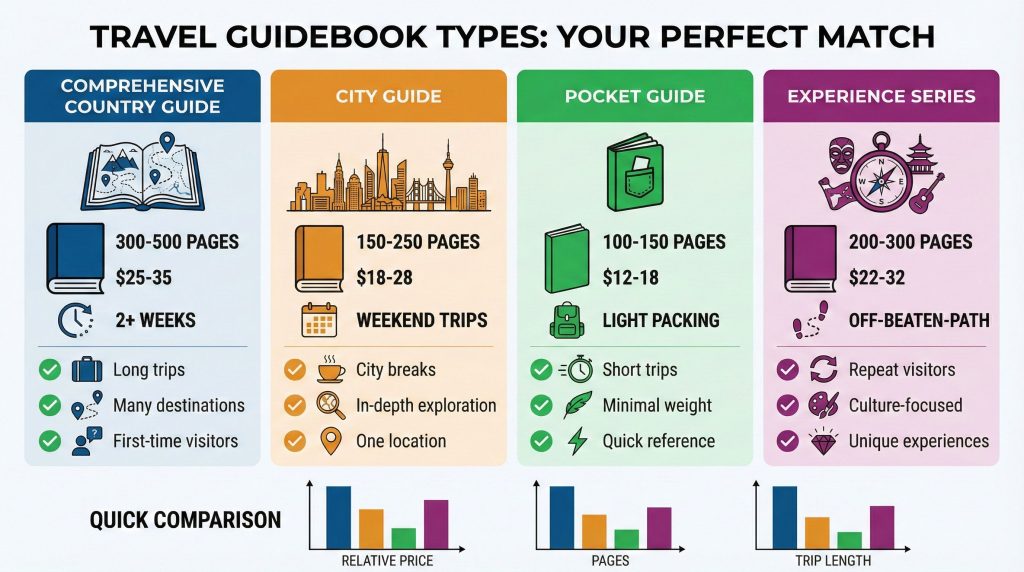
The Different Book Types
Lonely Planet makes several different guidebook formats now, and this actually matters because buying the wrong one is annoying.
The comprehensive country guides are what most people picture. These are 300-500-page books covering an entire country.
They’ve got everything from visa requirements to specific bus schedules to history chapters to where to find the best street food.
City guides focus on one major city. They’re smaller, more detailed for that specific place, and better if you’re just doing a long weekend somewhere.
Pocket guides are genuinely pocket-sized. They’re stripped-down versions with less detail but easier to carry around when you’re actually walking through a city.
The Experience series is newer and completely different. Instead of phone numbers, addresses, and transit info, these books focus on unique local experiences and cultural insights.
Less practical information, more “here’s what makes this place special.”
Maps That Actually Work
The maps in Lonely Planet books are legitimately detailed. They mark specific hostels, restaurants, bus stations, metro stops, attractions, and neighborhoods.
For situations without consistent phone service or to avoid international data charges, these maps can be used offline. They are sufficiently sized and detailed to help travelers navigate and locate specific places referenced in the books.
Reports indicate people are using these maps to navigate cities in Afghanistan, Mongolia, and rural Peru.
Cultural and Historical Context
This is where Lonely Planet books separate themselves from quick online lists.
Each guidebook includes substantial chapters on history, local customs, cultural norms, food traditions, and social context. You’re getting background that helps you understand why a place is the way it is, not just a list of sights.
Some people skip these chapters entirely. Some people read them cover to cover before their trip.
Having that context available can contribute to a sense of understanding your surroundings, rather than simply checking boxes on a tourist list.

Practical Information All in One Place
Visa requirements, seasonal weather patterns, local transportation systems, accommodation options at different price points, restaurant recommendations, safety considerations, and practical tips about everything from tipping to dress codes.
All of that lives in one organized book that you can flip through without internet access.
The information is organized by progression: overview and highlights, practical planning details, and detailed destination chapters divided by region or city.
Performance Analysis
Where These Books Actually Shine
The Lonely Planet books work best when you’re planning a longer trip as a family, a solo traveler, or a backpacker to a country that’s neither super touristy nor super developed. If you’re spending three weeks traveling through Vietnam, Peru, Morocco, or Thailand, having that consolidated information helps. You can plan a rough route, understand transportation options between cities, and have backup accommodation options if your first choice falls through.
The books also work well for budget travelers. The hostel and cheap restaurant recommendations are actually useful, and the walking tour suggestions help you see cities without spending money on tours.
People keep these books after trips, suggesting their value extends beyond mere reference material. They become souvenirs that remind you of the planning process and the trip itself.
Where They Fall Short
The comprehensive country guides contain a lot of information, which can make it difficult to find specific details quickly.
Information becomes outdated between editions. Restaurants close, hotels change ownership, bus routes get modified, and prices increase.
If you’re using an edition that’s 2 or 3 years old, some of the specific practical details won’t be up to date.
Some users report that the website and app do not provide the same level of usability or information organization as the physical books. Issues include less effective search functions and booking integration.
If you buy translated versions of the guidebooks (like Chinese editions), apparently, some cultural nuances get lost in translation. References to local customs or historical context sometimes get diluted or miscommunicated.
The English versions avoid that problem, but they do lean toward Western perspectives on destinations, which shape how places get described and what gets emphasized.
Real-World Usage Patterns
People use these guidebooks in wildly different ways.
Some travelers read them months before a trip, taking notes and building detailed itineraries. Others buy them, skim them once, and then mostly use the maps while traveling.
Some people start planning three years in advance (apparently, this is a thing).
Others don’t crack open the book until they’re on the plane.
The flexibility is actually a strength. The book works whether you’re a hardcore planner or someone who just wants a safety net of information while figuring things out on the ground.
The guides provide enough structure to feel secure, but enough openness to improvise and adjust based on what you actually encounter while traveling.
Pros and Cons
What Actually Works
Consolidated expert information in one place. You’re not bouncing between 47 browser tabs trying to piece together transportation info, accommodation options, and cultural context.
Maps you can use offline. This matters way more than it sounds, especially when you’re in a place with spotty wifi, trying to find your hostel at 11 pm.
Budget-friendly recommendations. The hostel and cheap-eats suggestions are genuinely useful for families, solo travelers, and backpackers looking to keep costs down. Cultural context that helps you understand places. The history and culture chapters add depth to your trip rather than just surface-level tourism.
Works offline completely. No data charges, no wifi hunting, no drained phone battery from constant map checking.
Multiple formats for different trip types. You can get exactly the level of detail you need, without being stuck with a single option.
To grab a Lonely Planet guide for your next trip, you can check current prices and editions here. Just make sure you’re getting a recent edition.
What Doesn’t Work
Information can become outdated between editions. If your guidebook is more than two years old, expect some details to be out of date, with prices changing, venues closing, and new spots appearing.
Overwhelming at first. The guides are dense with small print and information that takes time to parse.
Heavy to carry around. The full country guides are thick books that add weight to your luggage.
The website and app are mediocre. The digital experience doesn’t match the quality of the physical books.
Western perspective on destinations. The cultural lens is primarily Western, shaping how places are described.
Not great for super short trips. If you’re doing a three-day city break with good wifi, you probably don’t need a 300-page guidebook.
User Experience
The Planning Phase
When you’re planning a trip, a Lonely Planet guide gives you a framework to start with.
You can read through the highlights section to figure out what actually interests you. You can find practical information on visa requirements, the best times to visit, and budget expectations.
You can browse the destination chapters to rough out a route.
Some people find this process really satisfying. You’re building a trip from scratch with all the information you need in one place.
Other people find it tedious and prefer the faster pace of online research, where you can quickly jump between sources.
The guidebooks work best when you start planning weeks or months in advance and can spend time reading through sections without pressure.
While Actually Traveling
The books become reference material while you’re on the ground.
You might flip to the maps section every day to navigate. You might check the restaurant recommendations when you’re hungry.
You might read the city overview on a bus ride to your next destination.
The physical book means you’re not constantly on your phone, which some people prefer. You can easily share the book with travel partners.
You can make notes in the margins or dog-ear pages.
The downside is that it’s another thing to keep track of, another item in your bag, and something you need to protect from rain or damage.

The Lonely Planet Journeys Service
This is completely separate from the guidebooks but worth mentioning.
Lonely Planet now offers a matching service that connects you with local travel experts who plan custom itineraries. These are actual people who own tour agencies in the destination, not AI recommendations or templated trips.
You fill out preferences about what you want to experience, your budget, travel style, and specific interests. Then an expert spends significant time building a personalized itinerary with insider knowledge and local recommendations.
The service costs more than a guidebook (obviously), but it solves a different problem. You’re paying for personalized expertise and someone who can adjust recommendations in real-time if you need help while traveling.
For families who want expert planning without doing all the research themselves, this makes sense. You can learn more about Lonely Planet Journeys here if that sounds more useful than a DIY approach with guidebooks.
After Your Trip
People keep their Lonely Planet books after traveling, which is interesting.
The books become mementos of the planning process and the trip itself. You remember reading certain sections, finding specific recommendations, and using the maps in particular cities.
Some travelers collect them from different trips over the years. Others pass them on to friends planning similar journeys.
A few people report rereading sections years later to remember details about places they visited.
That lasting value is hard to quantify, but it adds something beyond pure utility.
Value for Money
What You’re Actually Paying For
A physical Lonely Planet country guide costs $25-35, depending on the destination and edition.
You’re paying for expert research, aggregated information, detailed maps, cultural context, and the convenience of having everything organized in one place.
Digital versions cost less, usually $15-25, but you lose the map visibility and the tactile advantage of flipping through pages to find information.
Compared to the overall cost of a family trip, $25-35 for a guidebook is a small percentage. But that doesn’t mean it’s automatically worth it.
When the Value Makes Sense
The guidebooks provide real value when you’re traveling to less-developed countries where internet reliability is questionable. Places like Mongolia, Peru, parts of Southeast Asia, Central Asia, or rural areas anywhere.
Budget travelers get solid value from the hostel recommendations and cheap restaurant suggestions.
Longer trips (two weeks or more) get more value because you’re using the book across many destinations and situations.
People who like reading about destinations before traveling get value from the cultural and historical chapters that provide context.
Families planning together can share one book and use it as a reference point for group decisions about where to go and what to do.
If that sounds like your situation, grabbing a current edition for your destination makes sense.
When It’s Probably Not Worth It
Short city breaks, where you’ll have constant wifi and phone access the whole time, don’t really need a comprehensive guidebook. You can find the same information online through blogs and travel sites.
Trips to highly developed countries with excellent internet infrastructure (Japan, South Korea, most of Western Europe) make it easy to research on the go without a physical reference.
If you prefer spontaneous travel without pre-planning, a guidebook might actually work against your approach by creating expectations about places before you encounter them.
People who travel ultra-light and don’t want to carry books won’t find the physical guides valuable, even if the information is useful.
Budget Comparison
Spending $30 on a guidebook compared to other trip expenses:
A family of four spending $3,000-5,000 on a week-long international trip sees the guidebook as less than 1% of the total cost.
But if you’re a budget backpacker trying to travel for months on $20 a day, that $30 represents a day and a half of your total budget.
The value calculation shifts based on your overall trip budget and how you allocate money between planning tools and actual travel expenses.
Final Verdict
Lonely Planet guidebooks still have real value in 2024, but that value is specific to certain types of travelers and trips.
The physical books work best as comprehensive reference guides with excellent maps for longer trips to places where internet access isn’t constant or reliable.
The cultural and historical depth sets them apart from quick online listicles and provides context that helps you understand destinations rather than just visit them.
Who Should Buy Them
You should consider getting a Lonely Planet guide if you’re planning a family trip longer than a week to a destination that’s not super developed and you want comprehensive information in one organized place.
Budget travelers benefit from the hostel and cheap food recommendations. First-time visitors to a region benefit from the cultural context and practical tips.
People who like having offline reference material benefit from not needing constant phone access.
Families traveling with kids benefit from having a single shared reference everyone can consult when planning daily activities.
Who Can Skip Them
You can skip the guidebooks if you’re doing short city trips with reliable internet, prefer assembling information from many online sources, or travel ultra-light and don’t want to carry books.
If you’re going somewhere with extensive online resources and travel blogs (like Japan or Iceland), you can probably find everything you need without buying a guidebook.
If you prefer spontaneous travel where you figure things out on arrival, a guidebook might create too much structure and expectations.
The Bottom Line
This Lonely Planet review comes down to a simple assessment. The guidebooks provide curated, expert information, organized to help you plan and execute trips with less stress and more context.
That service has value if it matches how you like to travel.
The books aren’t essential for everyone, but they’re genuinely useful for family travelers planning longer trips to less-developed destinations who want the security of having comprehensive information available offline.
Just make sure you buy a recent edition (within the last 1-2 years) so the practical details are up to date. Outdated prices and closed restaurants create unnecessary frustration.
Check current Lonely Planet editions and prices here to see if there’s a recent guidebook for your destination.
The maps alone often justify the cost if you’re going somewhere you’ll be navigating on foot regularly. The cultural chapters justify the cost if you care about understanding places beyond surface tourism.
For me, the guidebooks make sense for bigger trips where I want comprehensive planning support. For weekend city breaks, I usually skip them and just use online resources.
Your mileage will vary based on your travel style, destination, trip length, and how you like to plan.
Affiliate Disclosure for Smart Miles Traveler
At Smart Miles Traveler (https://smartmilestraveler.com), our goal is to provide helpful, honest, and practical travel tips, product recommendations, and money-saving strategies.
Some of the links on this website are affiliate links. This means that if you click on a link and make a purchase, we may earn a small commission at no extra cost to you.
These commissions help support the operation of this website and allow us to continue creating free, high-quality travel content for our readers.
Questions or Concerns
If you have any questions about our affiliate relationships or how this website operates, please feel free to contact us.
📧 Email: info@smartmilestraveler.com