
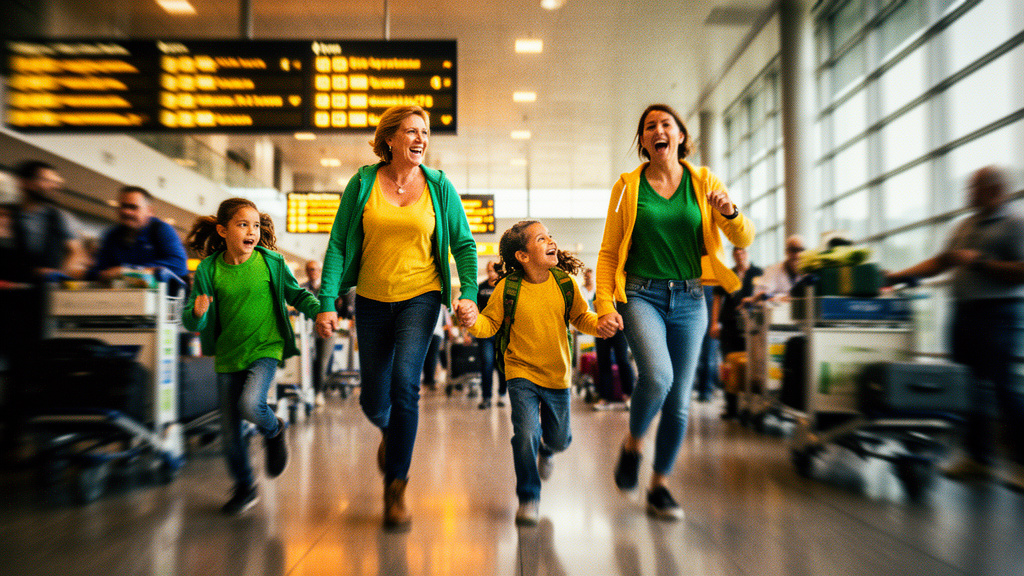
I’ve traveled with my family more times than I can count, and I can honestly say that the difference between a chaotic trip and a smooth one comes down to preparation. When you’re juggling multiple kids, bags, snacks, and entertainment devices while trying to keep everyone reasonably happy, having the right systems in place becomes absolutely essential.
The challenge goes beyond what you pack, how you pack it, what you prepare beforehand, and which specific tools actually make your life easier versus just taking up space in your luggage. It all matters tremendously.
Understanding the Core Philosophy of Family Travel Hacks & Preparation
The basic principle behind successful family travel means having the right things accessible at the right time. I’ve learned this the hard way after too many trips where I packed everything but couldn’t find what I needed when my daughter started feeling carsick or when my son needed a specific toy to calm him down during a flight delay.
The theoretical framework here builds on the accessibility hierarchy and predictive packing. You need to anticipate scenarios based on your specific children’s needs, the length of your trip, your mode of transportation, and your destination.
A beach vacation requires different preparation than a city exploration trip, and a road trip demands a completely different level of organization than air travel.
What makes this particularly challenging is that every family operates differently. Your kids might be great sleepers who can nod off anywhere, or they might need very specific conditions to rest.
Some children are adventurous eaters, while others need familiar foods.
The trick is developing a system flexible enough to accommodate your family’s unique rhythms while maintaining enough structure to prevent chaos.
The Strategic Packing System
Let me walk you through what actually works for organizing family travel gear. The foundation is compartmentalization, but implementing it requires more thought than most people realize.
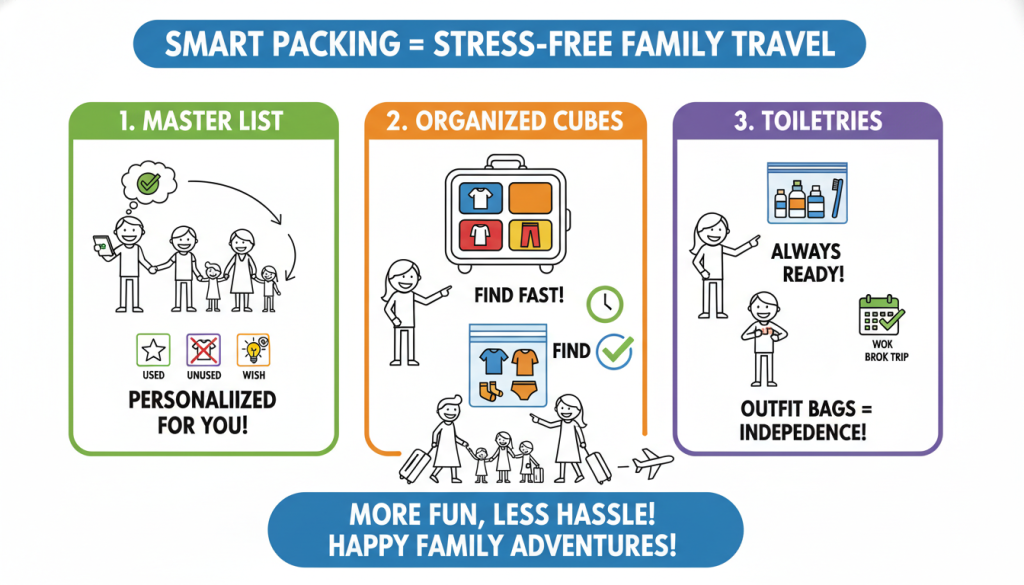
Start with a master packing list on your phone or computer, and refine it after every trip. This living document becomes incredibly valuable over time.
After each trip, I spend about 15 minutes updating my notes on what we used constantly, what we never touched, and what we desperately wished we had brought.
These annotations transform a generic list into a personalized guide that reflects your family’s actual needs.
For the actual packing, compression cubes are genuinely transformative, but the key is assigning them specific purposes. I use different colored cubes for each family member, which eliminates the frantic search through bags when someone needs a change of clothes.
Within each person’s cubes, I separate them by type. One for tops, one for bottoms, one for undergarments, and socks.
This level of organization might seem excessive until you’re dealing with a potty training accident in a restaurant bathroom and need to grab exactly what you need in under thirty seconds. That moment of crisis reveals how valuable these systems really are.
The gallon-sized ziplock bag method is something I picked up from a flight attendant years ago. You create complete outfits, shirts, pants, underwear, socks, and seal them in person bags.
Label each bag with a day or activity.
This approach means your child can literally grab one bag and have everything they need, and if something gets dirty or wet, the mess is contained. It also helps kids develop independence because they can dress themselves without needing to sort through options.
For toiletries, I maintain a separate travel kit that never gets unpacked at home. It lives in a clear, TSA-approved toiletry bag and contains travel sizes of everything we regularly use.
About a week before any trip, I check levels and replace anything running low.
This eliminates the morning-of-travel scramble and ensures you never forget essential items because they’re sitting in your shower at home.
The Entertainment and Distraction Strategy
Digital downloads are non-negotiable for modern family travel, but they need preparation time that most parents don’t account for. You can’t just assume the hotel will have decent WiFi or that you’ll have cellular data throughout your route.
Download everything at least two days before departure: shows, movies, audiobooks, educational apps, and games.
I learned this after a six-hour flight delay with nothing downloaded and two very cranky children.
You need analog entertainment, too. Tablets die, get forgotten, or break.
I keep a dedicated travel bag with specific items that come out only on trips, which makes them special and engaging.
This includes magnetic travel games, window crayons that wipe clean, small notebooks, sticker books, and card games suitable for your kids’ ages.
The rotation system works remarkably well for longer trips. Don’t give kids access to everything at once.
Parcel out entertainment throughout the trip.
Start with simpler activities and save the most engaging ones for when energy is flagging or patience is wearing thin. I usually keep one “emergency” activity completely hidden, something new they’ve never seen before, for meltdown moments. This reserve option has saved me more times than I can count.
Food and Snack Architecture
Hunger is the enemy of peaceful travel, but so is the chaos of crumbs, spills, and half-eaten snacks scattered everywhere. The solution is a thoughtful food strategy that addresses both nutrition and logistics.
Pre-portioned snacks in small reusable containers prevent both mess and overconsumption. I prep these the night before travel, creating a variety of options: crackers, cut vegetables, cheese cubes, dried fruit, nuts if allergies aren’t a concern.
Each child gets their own small bag or lunchbox with several containers.
This approach gives them autonomy while maintaining control over what they’re eating.
For longer trips, the collapsible cooler bag with ice packs significantly extends your fresh food options. You can pack sandwiches, yogurt, fruit, and drinks that stay cold for hours.
This is especially valuable for children with dietary restrictions or picky eaters who might struggle with airport or roadside food options.
Water management deserves special attention. Collapsible or foldable water bottles take up minimal space when empty but provide constant access to hydration.
For plane travel, bring them empty through security and fill them at water fountains afterward.
Staying hydrated genuinely reduces crankiness, headaches, and fatigue for everyone.
The Health and Safety Framework
Motion sickness can derail a trip faster than almost anything else, so prevention is critical. Ginger candies or ginger chews are natural options that work reasonably well for mild cases.
For longer trips or kids prone to motion sickness, positioning matters tremendously.
Middle seats in cars or seats over the wing in planes experience less motion. Having bags easily accessible, even if you hope you won’t need them, prevents panic and mess during those critical moments.
Your travel first aid kit should be comprehensive but compact. Include basic medications for fever, pain, allergies, and stomach issues.
Add bandages in various sizes, antiseptic wipes, tweezers, and any prescription medications your family uses.
I also include a digital thermometer, which has proven essential more times than I expected.
Medication scheduling during travel across time zones doesn’t get discussed enough. If your child takes medications at specific times, you need a clear plan for adjusting doses when crossing time zones.
For short trips, many families maintain home-time schedules.
For longer stays, gradual adjustment works better. Document your approach so both parents understand the system.
Sleep and Rest Optimization
The portable white noise machine is genuinely transformative for families who travel often. Hotel rooms are noisy: hallway conversations, slamming doors, elevator dings.
White noise creates consistency and masks disruptive sounds.
I’ve watched my kids sleep peacefully through hotel noise that would have woken them instantly at home.
Blackout solutions matter too. Hotel curtains often don’t fully close or don’t block light effectively.
Portable blackout shades or even large garbage bags and painter’s tape can create the darkness some children need to sleep well.
This might sound extreme, but proper sleep affects everyone’s mood and makes everything else easier.
Familiar comfort items become exponentially more important away from home. Whether it’s a specific blanket, stuffed animal, or pillow, don’t skip any of them.
The space they take up is worth the security they provide.
I’ve driven back home from hotels to retrieve forgotten comfort items because the choice was either that or no sleep for anyone.
Travel Sleep Quality Calculator
Optimize your family’s sleep environment when traveling. Calculate your sleep quality score based on noise control, light blocking, comfort items, and room conditions to get personalized recommendations for better rest away from home.
🎯 Priority Improvements
💡 Personalized Recommendations
Document and Information Management
The document organization system prevents both disaster scenarios and everyday frustrations. I use a travel document folder that contains physical copies and digital backups of essential information: passports or IDs, insurance cards, vaccination records, emergency contacts, reservation confirmations, and maps or directions.
The digital backup lives in a password-protected cloud folder accessible from any device. Photograph important documents and save them here.
If physical documents get lost or stolen, you have immediate access to the information you need. This has personally saved me during a lost wallet situation when I needed to provide insurance information to a hospital.
Create a one-page emergency information sheet with all critical details: allergies, medications, medical conditions, emergency contacts, and insurance information. Keep copies in several locations.
If something happens and you’re unable to talk, whoever is helping you already has the information they need.
The Hotel Room Setup Routine
Arriving at a hotel room with tired kids needs an immediate action plan. I’ve developed a routine that changes chaotic arrival into smooth settling.
First priority is safety assessment and modification. Electrical outlets get covered, toilet locks go on if you have young children, furniture with sharp corners gets moved or padded, and anything breakable or dangerous gets relocated to high shelves or back into your bags.
This takes about five minutes but prevents injuries and damage charges.
Next comes unpacking essentials, not everything, just what you’ll need immediately. Toiletries go in the bathroom, pajamas and next-day outfits come out, chargers get plugged in, and comfort items get placed where kids can access them.
This limited unpacking reduces clutter while providing necessary access.
The nightlight setup might seem minor, but it makes nighttime bathroom trips safer and less disruptive. The unfamiliarity of hotel rooms can be genuinely disorienting in the dark, especially for children.
A small plug-in nightlight or even a flashlight positioned strategically helps everyone navigate safely.
Car Travel Specific Strategies
Road trips require a different organizational approach than other forms of travel. The car organizer that hangs on seat backs provides accessible storage for frequently needed items: snacks, small toys, wipes, tissues.
This keeps things off the floor and within reach without requiring the driver to stop.
The tablet holder mounted to the headrest provides entertainment positioning that doesn’t require kids to hold their devices, reducing neck strain and motion sickness. Make sure it’s securely attached and positioned at a suitable eye level.
Window crayons or dry-erase markers for windows provide entertainment without small pieces that get lost. Kids can draw, play games, and wipe clean for fresh starts.
The activity engages them with the passing scenery rather than creating a disconnection from the experience.
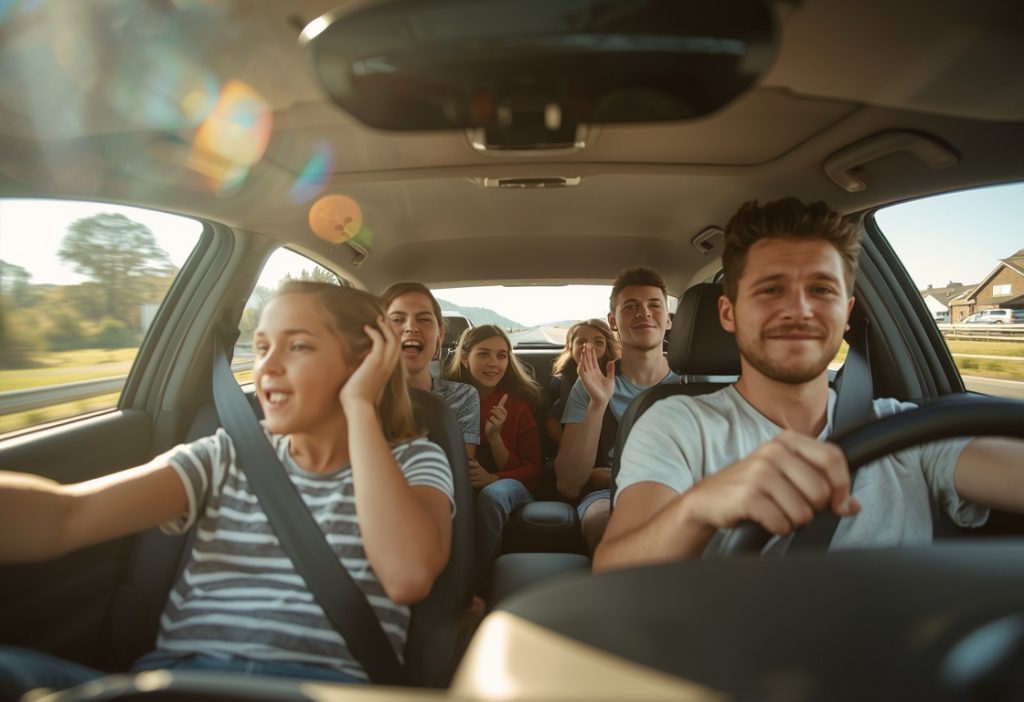
Strategic stop planning matters more than most families realize. Research rest areas or stops with playgrounds or open spaces where kids can genuinely run and burn energy.
These longer, active stops every few hours beat frequent short stops that don’t allow for real movement.
Air Travel Optimization
Flying with children means accepting that you’ll be carrying more than seems reasonable. The personal item and carry-on allowances need to be used strategically.
The under-seat bag should contain everything you might need during the flight: snacks, entertainment, wipes, change of clothes for young children, and medications.
Your overhead carry-on can hold items you’ll need at your destination but not during transit.
Gate check your stroller for free and use it through the airport. The mobility it provides, carrying bags, containing tired children, moving efficiently through crowds, makes it absolutely worth managing through security.
The car seat travel bag protects your car seat during baggage handling and provides space to store extra items like diapers, toys, or even shoes. It essentially becomes free luggage.
Just make sure everything inside is soft and won’t damage the car seat.
Board when they call your group, not during pre-boarding unless you genuinely need the extra time. The less time your children spend confined in airplane seats, the better.
Let them burn energy in the gate area until the last reasonable moment.
Common Mistakes and How to Avoid Them
Overpacking is the most frequent error, and it creates cascading problems: heavier bags, more to keep track of, difficulty finding what you need, and exhaustion from managing it all. The solution is ruthless editing.
Remove half of the clothes you initially pack.
You’ll do laundry if necessary, and you genuinely won’t need as much as you think.
Under-preparing entertainment for delays is another critical mistake. Assume everything will take longer than scheduled. Flights are delayed, traffic is heavy, and lines are longer than expected. Having enough entertainment and snacks for double your anticipated travel time provides a buffer against stress.
Failing to maintain the systems throughout the trip leads to chaos by day three. The organizational structure you establish on day one needs maintenance.
Spend ten minutes each evening reorganizing bags, replenishing snack containers, charging devices, and setting up for the next day.
Not involving kids in the process is a missed opportunity. Age-appropriate participation teaches responsibility while reducing your workload.
Even young children can pack their own small backpack with a few toys and books.
Older kids can pack their entire cube or bag with supervision.
People Also Asked
What should I pack in a travel first aid kit for kids?
Include children’s pain reliever and fever reducer, antihistamine for allergies, upset stomach medication, bandages in various sizes, antiseptic wipes, tweezers for splinters, a digital thermometer, and any prescription medications your family needs. Keep it in a clear container so you can quickly see what you have.
How do you keep kids entertained on long flights?
Download movies, shows, and games onto tablets at least two days before your flight. Bring backup analog entertainment like sticker books, small toys, and card games.
Don’t give kids access to everything at once; rotate activities throughout the flight, and save the most engaging items for when patience starts to wear thin.
What are the best packing cubes for family travel?
Look for compression packing cubes in different colors so you can assign one color per family member. Medium-sized cubes work well for organizing tops, bottoms, and undergarments separately.
The color-coding system lets you quickly identify whose belongings are whose without opening every cube.
How do you deal with motion sickness while traveling with kids?
Position children in middle seats in cars or over the wing in planes where motion is less noticeable. Keep ginger candies or chews on hand as they help naturally reduce nausea.
Make sure kids stay hydrated and avoid heavy meals before travel.
Always have plastic bags easily accessible, just in case.
Should you bring a car seat when traveling by plane?
Yes, if your child is under two or needs the extra safety and comfort. Use a car seat travel bag to protect it during baggage handling, and use the extra space to pack soft items like diapers or clothes.
You can gate-check it for free or bring it on the plane if you purchased a seat for your child.
What are the best snacks to pack for traveling with children?
Pre-portion snacks like crackers, cut vegetables, cheese cubes, and dried fruit into small reusable containers. Avoid anything too messy or that melts easily.
Bring more than you think you’ll need, because hunger can trigger meltdowns faster than almost anything else on the road.
How do you organize hotel rooms when traveling with kids?
Do an immediate safety check when you arrive: cover outlets, move breakable items, and pad sharp corners. Unpack only essentials, such as toiletries, pajamas, and next-day clothes.
Set up a nightlight for safe navigation in the dark.
This takes about ten minutes but makes your stay much smoother.
Lets Recap
The difference between chaotic and smooth family travel comes down to systematic preparation, not luck. Invest time before your trip to establish organizational systems and maintain them throughout your travels.
Accessibility matters more than comprehensiveness. Pack strategically so the items you need most frequently are easiest to reach, and keep everything organized enough that you can find what you need within seconds.
Involve your children in age-appropriate ways throughout the process. This builds their independence, reduces your workload, and teaches valuable life skills they’ll use for years to come.
Your system should evolve as your family changes. What works with toddlers won’t work with teenagers, and what’s necessary for one destination might be excessive for another.
Adjust accordingly.
Preparation time spent at home saves exponentially more time and stress during your actual trip. The fifteen minutes of organizing snacks prevents thirty minutes of whining and searching for acceptable food options on the road.
Document and refine your approach after every trip. Your master packing list and travel systems should become increasingly personalized and effective over time, reflecting your family’s actual needs rather than theoretical ideals.
Affiliate Disclosure for Smart Miles Traveler
At Smart Miles Traveler (https://smartmilestraveler.com), our goal is to provide helpful, honest, and practical travel tips, product recommendations, and money-saving strategies.
Some of the links on this website are affiliate links. This means that if you click on a link and make a purchase, we may earn a small commission at no extra cost to you.
These commissions help support the operation of this website and allow us to continue creating free, high-quality travel content for our readers.
Questions or Concerns
If you have any questions about our affiliate relationships or how this website operates, please feel free to contact us.
📧 Email: info@smartmilestraveler.com