
Traveling with kids doesn’t have to be stressful. With the right preparation and strategies, family vacations can become cherished memories that last a lifetime. This ultimate family travel guide covers everything you need to know about traveling with children of all ages, from packing smart to keeping everyone entertained on the go.
Age-Specific Packing Strategies
Traveling with Infants and Toddlers
When traveling with babies, preparation is everything. Pack diapers for the entire trip plus extras in case of delays. A portable changing mat that folds compactly is essential, along with ziploc bags for soiled clothes. Don’t forget comfort items like a favorite blanket or stuffed animal – these can be lifesavers during meltdowns in unfamiliar places.
For toddlers, bring spill-proof cups and snacks that won’t make a mess. Portable high chairs or booster seats that attach to regular chairs can be invaluable at restaurants. A lightweight stroller that folds easily is worth its weight in gold, even if you think you won’t need it.
School-Age Kids (Ages 5-12)
School-age children can pack more of their own items, which actually helps them feel involved in the trip. Give each child their own small backpack or suitcase. This teaches responsibility and gives them a sense of ownership over their travel experience.
Focus on versatile clothing that can be mixed and matched. School-age kids also love having their own travel journal where they can draw pictures or write about their adventures. This not only keeps them occupied but creates a wonderful keepsake of the trip.
Traveling with Teenagers
Teens require a different approach. Let them pack their own bags with some guidance. They’ll want to bring entertainment like music, headphones, and perhaps their own camera or smartphone for photos. Give them some autonomy during the trip – letting teens choose one restaurant or activity can make them feel more invested in the vacation.
Teens also appreciate having their own space. Consider booking accommodations where teens can have some privacy, like a suite with separate living areas or adjoining hotel rooms.
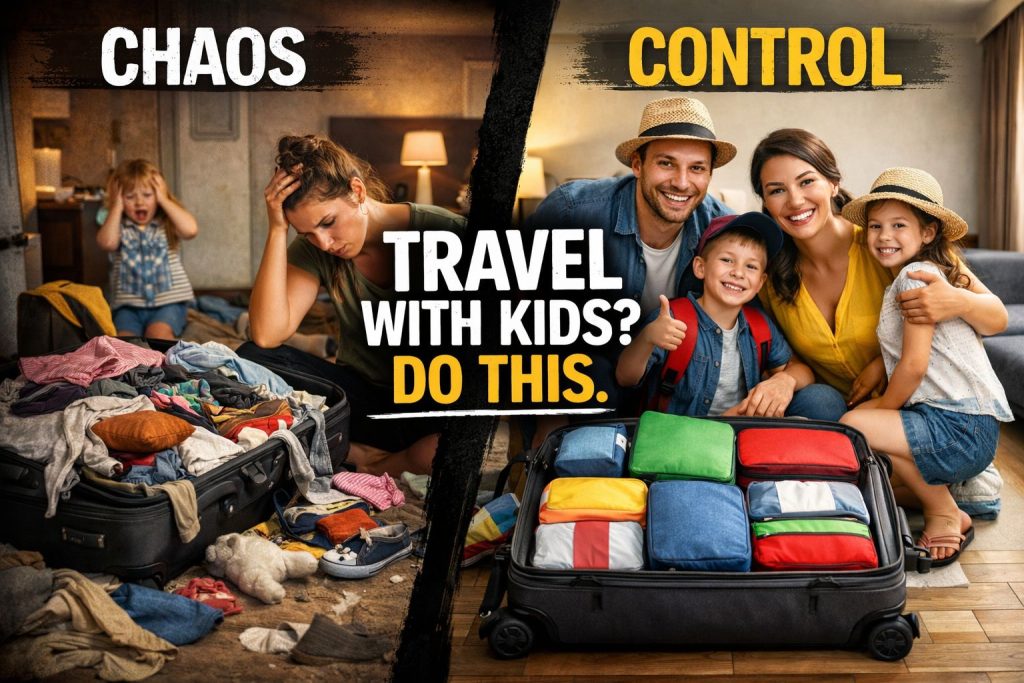
The One Packing Cube Per Person System
This game-changing strategy transforms packing for families. Instead of throwing everything into one giant suitcase, each family member gets their own color-coded packing cube. This system offers several advantages:
- Easy Identification: No more digging through shared luggage to find someone’s favorite shirt
- Faster Unpacking: Each person can unpack their own cube at the destination
- Less Stress: Kids can easily find their own items without constantly asking for help
- Better Organization: Keeps dirty and clean clothes separated during the trip
The First-Night Bag Strategy
Nothing ruins a vacation arrival faster than arriving at your hotel at midnight and having to dig through multiple suitcases for toothbrushes and pajamas. Solve this by packing a separate bag with essentials for your first night:
- Toiletries everyone needs immediately
- Change of clothes for each person
- Medications and comfort items for kids
- Phone chargers and devices
- Snacks and water bottles
This one bag travels with you separately and eliminates first-night chaos, allowing everyone to settle in quickly and get rested for a full day of adventure tomorrow.
Shared Toiletries Kit System
Instead of everyone bringing their own full-size toiletry bags, create a shared family kit. Use small travel-size containers for shampoo, conditioner, soap, and lotion. Label them clearly and pack them in a waterproof bag. This approach:
- Saves significant luggage space
- Reduces weight in checked bags
- Prevents spills from multiple bottles
- Makes airport security checks faster
Keep personal items like toothbrushes and medications in separate labeled bags within the main kit.
The Layering System for Clothes
Weather can be unpredictable, especially when traveling to new climates. Instead of packing heavy bulky items, focus on layers that can be added or removed easily. This approach works for all climates and activities:
- Base Layer: Moisture-wicking t-shirts and tops
- Mid Layer: Sweaters, fleece jackets, or cardigans
- Outer Layer: Waterproof, windproof jacket
This system works for both cold and warm destinations and means you pack fewer items overall while staying comfortable in any weather.
Entertainment Solutions: Screen-Free and Tech-Savvy Options
Screen-Free Entertainment
Don’t rely solely on tablets and phones. Pack classic travel games like playing cards, travel-sized board games, and coloring books with colored pencils. Magnetic games are perfect because pieces won’t get lost in car seats or plane trays. Activity books with mazes, word searches, and puzzles provide hours of entertainment without screens.
Tech-Savvy Entertainment
When you do use screens, be strategic. Download movies, shows, and games onto devices before leaving home – streaming over cellular data can be expensive and spotty. Audiobooks are excellent for car rides and can be enjoyed by the whole family. Don’t forget headphones – they prevent sibling disputes over volume and keep other travelers from being disturbed.
The Download-Everything Strategy
Before any trip, download entertainment content while you still have reliable Wi-Fi. This includes:
- Movies and TV shows onto tablets or phones
- Music playlists for everyone in the family
- Audiobooks for the whole family or individual preferences
- Offline maps of your destination city
- Translation apps if traveling internationally
Having everything downloaded means you’re not dependent on finding Wi-Fi or using expensive data roaming while traveling.
The Ziploc Bag Strategy for Snacks and Small Items
Ziploc bags are a traveling family’s secret weapon. Use gallon-size bags for snacks – portion out crackers, pretzels, and trail mix into individual servings. Quart-size bags are perfect for organizing small items like:
- Charging cables and earbuds
- Small toys and game pieces
- Wipes and sanitizer packets
- Extra clothes for younger kids
This system keeps bags organized and prevents small items from getting lost in the bottom of luggage.
Budget Strategies for Family Travel
Disney Resort Savings
Disney vacations can be expensive, but smart planning can save thousands. Consider value resorts over deluxe hotels – you’ll spend less time in the room anyway. Book during off-peak seasons when rates are lower. Disney typically requires a deposit when booking, usually $200 per reservation, with the final payment due about 30 days before arrival.
Look for package deals that include tickets and dining plans. Sometimes staying at a Disney property offers benefits like early park entry that can make the experience worth the extra cost.
Value vs. Deluxe Resort Strategy
Value resorts cost significantly less but still offer the full Disney experience. The money you save on accommodation can be used for experiences, souvenirs, or extending your trip. Deluxe resorts offer prime locations and theming, but ask yourself: will you actually spend enough time at the hotel to justify the extra cost?
The $5000 Vacation Budget Framework
For a typical family vacation, here’s how to allocate a $5000 budget:
- Transportation (30%): $1500 for flights, rental car, or gas
- Accommodation (35%): $1750 for hotels or rental
- Food & Dining (20%): $1000 for groceries, restaurants, and snacks
- Activities & Entertainment (10%): $500 for attractions, tours, and experiences
- Miscellaneous (5%): $250 buffer for souvenirs, tips, and unexpected costs
Adjust these percentages based on your priorities – if you love fine dining, allocate more to food. If you’re planning an activity-heavy trip, shift funds to entertainment.
Health and Medication Preparation
The Medication Mini-Kit
Create a small travel medical kit with essentials. Include liquid children’s pain reliever, bandages, antiseptic wipes, thermometer, and any prescription medications in original containers. Don’t forget motion sickness medication if anyone in your family is prone to it.
Motion Sickness Preparation
If you’re traveling by car, boat, or plane with someone who gets motion sickness, prepare before you leave. Medication works best when taken before symptoms start. Natural remedies like ginger candies or acupressure bands can also help. Sit near the front of vehicles, avoid reading while moving, and focus on the horizon when possible.
Top Family Destinations
Destin, Florida: Beach Paradise for All Ages
Destin offers some of the most beautiful beaches in the United States. The sugar-white sand and emerald waters are perfect for families. Henderson Beach State Park provides a more natural beach experience with facilities, picnic areas, and chances to see wildlife. The shallow, calm waters make it ideal for young children, while older kids and teens can enjoy activities like banana boat rides, parasailing, and fishing charters.
Beaver Creek, Colorado: Family Ski Adventure
For winter family fun, Beaver Creek is exceptional. The resort caters specifically to families with children’s ski school, dedicated beginner areas, and activities beyond skiing. The village is pedestrian-friendly and easy to navigate. After a day on the slopes, families can enjoy ice skating, hot cocoa by the fire, and evening entertainment. The resort offers ski-free programs for kids at certain times of year, making it more affordable for families.
Frequently Asked Questions About Family Travel
What’s the best age to start traveling with children?
Many parents find that ages 3-6 are ideal for traveling. Children at this age are potty-trained, can communicate their needs, and are young enough to still be excited by new experiences. However, families travel successfully with babies through teenagers – it just requires adjusting your expectations and preparations for each age.
How do I keep kids entertained on long flights or car rides?
Variety is key. Combine screen time with hands-on activities. Download movies and games before leaving home. Bring coloring books, small toys, and snacks. Stop frequently on road trips to let kids burn energy. For flights, walk the aisles when possible and have surprise activities revealed at intervals throughout the journey.
What should I do if my child gets sick while traveling?
Always travel with a basic medical kit. Before your trip, research urgent care facilities and hospitals at your destination. Travel insurance can cover medical emergencies and trip cancellation if someone gets sick before departure. Many hotels have doctors on call or can recommend local medical services.
How can I make family travel more affordable?
Travel during off-peak seasons, be flexible with dates, and consider destinations with lower costs of living. Vacation rentals often provide kitchens, allowing you to prepare some meals. Look for free activities at your destination – beaches, parks, hiking trails, and museums with free admission days. Book flights and accommodations early for the best prices.
What’s the best way to document family travel memories?
Encourage each family member to keep a travel journal. Designate one person as the main photographer, but let kids take pictures too with disposable cameras or old smartphones. Collect small mementos like ticket stubs and postcards. After the trip, create a photo book or scrapbook together – this extends the joy of the vacation and creates something tangible to remember it by.
Final Thoughts on Family Travel
Traveling with children requires more planning and patience than solo travel, but the rewards are immeasurable. Kids see the world with wonder and curiosity that can renew your own appreciation for new places and experiences. The strategies in this family travel guide will help you prepare practically, but remember that flexibility is your most important tool. Things will go wrong – flights get delayed, kids get cranky, weather doesn’t cooperate – but these moments often become the funniest stories you’ll tell for years to come.
Start where you are, use what you have, and begin with destinations that match your family’s interests and comfort level. Each trip will teach you something new about traveling together and about each other. The most important thing isn’t having the perfect itinerary or seeing everything – it’s spending time together and creating shared experiences that strengthen your family bond.
Now that you’re armed with these family travel tips, where will your next adventure take you?
Affiliate Disclosure for Smart Miles Traveler
At Smart Miles Traveler (https://smartmilestraveler.com), our goal is to provide helpful, honest, and practical travel tips, product recommendations, and money-saving strategies.
Some of the links on this website are affiliate links. This means that if you click on a link and make a purchase, we may earn a small commission at no extra cost to you.
These commissions help support the operation of this website and allow us to continue creating free, high-quality travel content for our readers.
Questions or Concerns
If you have any questions about our affiliate relationships or how this website operates, please feel free to contact us.
📧 Email: info@smartmilestraveler.com