
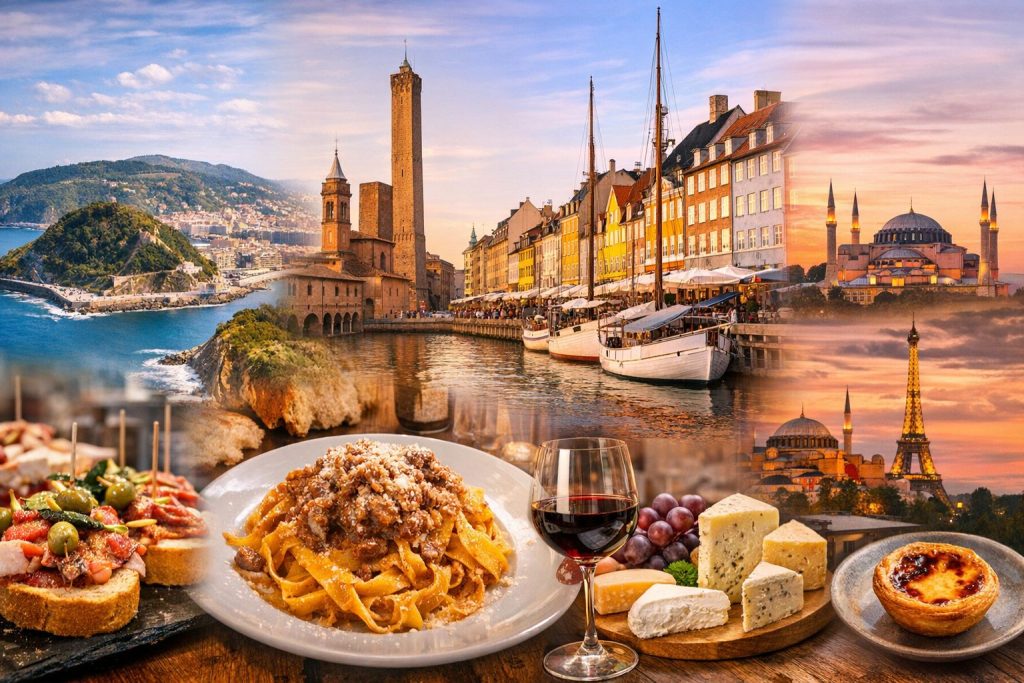
Europe is a continent where food isn’t just sustenance—it’s a way of life, a cultural expression, and for many travelers, the very reason for exploring. From the sun-drenched Mediterranean coasts to the misty harbors of the north, each city tells its story through flavors, recipes passed down through generations, and innovative culinary movements that are reshaping how we think about food. Whether you’re a dedicated foodie planning your entire itinerary around meals or simply someone who believes that the best way to understand a culture is through its cuisine, Europe offers an unparalleled gastronomic adventure. This guide will take you through the best food cities in europe.
What Makes Europe’s Food Cities Special?
The diversity of European culinary traditions is staggering. In a single trip, you could experience the refined techniques of French classical cuisine, the rustic heartiness of Italian pasta dishes, the innovative spirit of Nordic cooking, and the vibrant flavors of Spanish tapas. What sets the best European food cities apart isn’t just excellent restaurants—it’s the entire food ecosystem: bustling markets where farmers sell morning-fresh produce, centuries-old recipes served in humble tavernas, innovative young chefs pushing boundaries, and a deep cultural respect for mealtime as a sacred ritual.
Recent rankings from food experts and travel publications consistently highlight certain destinations that stand above the rest. TasteAtlas’s 2025/26 rankings named Rome the world’s best food city, while other cities like San Sebastian, Bologna, Lyon, and Copenhagen continue to earn accolades from food critics worldwide. But beyond the famous names, there are underrated gems waiting to be discovered by curious travelers.
San Sebastian, Spain: The Pintxos Capital
Why It’s a Food Lover’s Paradise
San Sebastian (Donostia in Basque) consistently ranks among the top food cities not just in Europe, but globally. What makes this coastal city in Spain’s Basque Country so special? It starts with pintxos—the Basque version of tapas. These small bites, typically served on bread, are meant to be eaten standing up, hopping from bar to bar in the old town’s narrow streets. The culture here encourages grazing, socializing, and trying as many different flavors as possible.
Must-Try Experiences
The pintxos scene in San Sebastian is legendary. Head to the Old Town (Parte Vieja) around dusk, when locals begin their nightly txikiteo—bar hopping with small glasses of txakoli, the slightly sparkling local white wine. Each bar specializes in specific pintxos: you might find incredible jamón ibérico at one venue, innovative seafood creations at another, and perfectly prepared tortilla española (Spanish potato omelet) elsewhere.
Beyond pintxos, San Sebastian boasts an extraordinary concentration of Michelin-starred restaurants relative to its size. The city has earned more Michelin stars per capita than almost anywhere else on Earth. Institutions like Arzak, Mugaritz, and Akelarre offer avant-garde tasting menus that have influenced modern cuisine globally. But you don’t need to spend hundreds of euros for an incredible meal—some of the best food experiences come from casual bars serving perfectly simple dishes like grilled turbot or Basque cider house staples.
Food Culture Highlights
The Basque Country has a distinct culinary identity separate from the rest of Spain. Local ingredients reign supreme: fresh fish from the Bay of Biscay, txakoli wine from coastal vineyards, artisanal cheeses from inland farms, and produce from the fertile countryside. The cooking here respects ingredients while applying sophisticated techniques. Food markets like Mercado de la Bretxa offer a glimpse into daily life, while the city’s food festivals—most notably the Semana Grande in summer—celebrate gastronomy with community events.
Bologna, Italy: La Grassa (The Fat One)
Why Bologna is Italy’s Culinary Heart
While Rome gets the tourists and Milan gets the fashion, Bologna gets the food. Known as “La Grassa” (The Fat One) for its rich cuisine, this northern Italian city in the Emilia-Romagna region is often called Italy’s culinary capital. It’s the birthplace of some of the country’s most iconic dishes and sits at the center of a region that produces Parmigiano-Reggiano cheese, traditional balsamic vinegar, Prosciutto di Parma, and Lambrusco wine.
Must-Try Dishes
Bologna is where tortellini was invented—small, stuffed pasta traditionally served in clear broth (in brodo). Tagliatelle al ragù is the authentic version of what the world knows as “spaghetti bolognese”—the ragù is a slow-cooked meat sauce that should cling to fresh egg pasta, never dried spaghetti. Mortadella, the predecessor to American bologna, is a delicacy here when made traditionally.
The food markets are essential experiences: Quadrilatero, the old market district near Piazza Maggiore, offers everything from fresh pasta to mortadella sandwiches. Mercato delle Erbe and Mercato di Mezzo are other great spots for sourcing local products. Many travelers combine a Bologna visit with tours to nearby producers—watching Parmigiano-Reggiano being made, visiting traditional balsamic vinegar acetaie, or seeing prosciutto curing facilities.
Restaurant Scene
Beyond the famous dishes, Bologna’s restaurant scene spans from ultra-traditional osterias serving recipes unchanged for centuries to innovative spots playing with modern techniques. Trattoria Anna Maria and Osteria Bottega are legendary for classic preparations. The city’s food culture emphasizes quality ingredients over complicated preparations—when you start with perfect handmade pasta and authentic Parmigiano-Reggiano, simple becomes extraordinary.
Lyon, France: The Authentic French Experience
Why Lyon Rivals Paris for Food
Ask many French food lovers where to find the country’s best eating, and they’ll say Lyon, not Paris. This city in eastern France was the birthplace of nouvelle cuisine in the 1960s and remains a hub of culinary innovation. More importantly, Lyon preserves France’s traditional bouchon culture—small, unpretentious restaurants serving hearty regional dishes.
The Bouchon Experience
A bouchon is a uniquely Lyonnaise institution—typically a small, family-run restaurant serving traditional dishes like quenelles de brochet (pike dumplings), tablier de sapeur (fried tripe), and various sausages. These places emphasize conviviality, generous portions, and wine served in pots. The most authentic bouchons are certified by a special designation, ensuring they meet traditional standards. They’re where locals gather for long, wine-fueled lunches and dinners.
Markets and Food Culture
Lyon’s food markets are spectacular. Les Halles de Lyon Paul Bocuse is a covered market named after the city’s most famous chef, housing high-end butchers, cheesemongers, bakers, and prepared food vendors. The outdoor markets, like Marché Quai Saint-Antoine along the Saône River, offer seasonal produce and regional specialties. The city also boasts outstanding traiteurs (takeout food shops), charcuteries, and fromageries—making it easy to assemble incredible picnics from local products.
Beyond Traditional
While bouchons represent Lyon’s soul, the city has a sophisticated modern dining scene too. Paul Bocuse’s legendary restaurant (now run by new chefs) continues to influence global fine dining. Younger chefs are opening innovative spots that respect tradition while embracing creativity. The Presqu’île district, in particular, has numerous contemporary restaurants worth exploring.
Copenhagen, Denmark: The Nordic Revolution
How Copenhagen Changed Global Cuisine
In 2004, chef René Redzepi opened Noma in Copenhagen and launched what became known as the New Nordic Cuisine movement. This culinary philosophy emphasized local, seasonal ingredients; traditional preservation techniques; and the purity of flavors. While Noma has closed, Copenhagen remains the epicenter of this revolution, with numerous excellent restaurants continuing to explore Nordic ingredients.
Beyond Fine Dining
What’s remarkable about Copenhagen is how accessible excellent food is. You can spend a fortune on a tasting menu at places like Geranium or Høst, but you can also eat incredibly well on a budget. The city’s bakeries—like Hart Bageri—make world-class bread and pastries. Smørrebrød (open-faced sandwiches) at places like Aamanns are affordable lunches that showcase Nordic ingredients: pickled herring, cured meats, aged cheeses, and seasonal vegetables.
Market Culture
Torvehallerne, the market hall in the city center, is essential visiting. You’ll find fresh seafood, artisanal cheeses, local vegetables, prepared foods, and excellent coffee. The market reflects Copenhagen’s food culture: high quality, sustainable, and innovative while respecting tradition. Street food markets like Reffen also show how the city embraces casual, creative dining.
Nordic Ingredients
The New Nordic movement introduced the world to ingredients previously overlooked: wild herbs, beach herbs, pickled and fermented everything, game meats, and sustainable seafood. Restaurants work closely with foragers and small producers. While you can certainly eat international cuisine in Copenhagen, the most interesting meals focus on what makes the region unique.
Istanbul, Turkey: Where East Meets West
A Culinary Crossroads
Istanbul straddles two continents, and its cuisine reflects influences from the Middle East, Central Asia, the Balkans, and the Mediterranean. This transcontinental city offers one of Europe’s most diverse food scenes, from humble street food to sophisticated fine dining. The recent addition of Turkish restaurants to the Michelin guide has brought renewed attention to Istanbul’s culinary excellence.
Turkish Breakfast Culture
Turkish breakfast (serpme kahvaltı) is a cultural institution not to be missed. A typical spread includes multiple cheeses, olives, tomatoes, cucumbers, honeycomb, clotted cream (kaymak), various breads, and Menemen—scrambled eggs with tomatoes and peppers. Many restaurants specialize solely in breakfast, making it a meal that can stretch for hours as locals linger over tea and conversation.
Street Food Mastery
Istanbul’s street food scene is exceptional. Simit (sesame-crusted bread rings) sold from carts are the city’s iconic snack. Balık ekmek (fish sandwiches) prepared near the Galata Bridge offer fresh grilled mackerel. Midye dolma (stuffed mussels) are sold by street vendors throughout the city. Each neighborhood has specialties worth seeking out.
The Asian Side Adventure
Food lovers should venture across the Bosphorus to Istanbul’s Asian side. The Kadıköy neighborhood in particular has a fantastic food market and restaurant scene. This is where you’ll find some of the city’s best kebabs—many food experts consider the Ciya Kebab on the Asian side to serve the best in Istanbul. The yogurt kebab there, with tender meat topped with creamy yogurt and buttery tomato sauce, represents the city’s ability to balance complex flavors perfectly.
Rome, Italy: Ancient Traditions
While Bologna represents northern Italian cuisine, Rome offers its own magnificent food traditions. Classic Roman pasta dishes like cacio e pepe (pecorino cheese and black pepper), carbonara (eggs, pecorino, guanciale, and black pepper), and all’amatriciana (tomato, guanciale, and pecorino) are deceptively simple dishes that require perfect execution. Rome’s street food scene is equally compelling: supplì (fried rice balls with mozzarella), pizza al taglio (pizza by the slice), and thin, salty pizza bianca.
Lisbon, Portugal: Tradition Meets Innovation
Lisbon offers one of Europe’s most exciting food scenes right now. The city respects its Atlantic seafood traditions while embracing global influences. Grilled sardines are simple perfection when fresh. Bacalhau (salt cod) is prepared in hundreds of ways. But Lisbon also has contemporary restaurants pushing boundaries, plus excellent natural wine bars and a growing international food scene.
Porto, Portugal: Wine and Hearty Flavors
Porto, in northern Portugal, offers a different experience. The cuisine is heartier, suited to the cooler climate. The francesinha—a sandwich layered with meats, covered with cheese and a beer-based sauce—is Porto’s iconic dish. The city is also the home of port wine, and visiting the wine cellars across the Douro River in Vila Nova de Gaia is essential. Like Lisbon, Porto offers excellent value for money compared to other European capitals.
Budapest, Hungary: Underrated Excellence
Budapest has emerged as one of Europe’s most underrated food cities. Traditional Hungarian dishes like snitzel, beef with noodles, and various stews are excellent at places like Vak Varjú. The city’s ruin pubs—bars created in abandoned buildings with mismatched furniture and graffiti—offer a unique drinking and dining culture. The Castle District houses romantic spots like Restaurant Pál, where the atmosphere matches the excellent food. Perhaps most surprising is how affordable quality dining remains in Budapest compared to Western European cities.
Ljubljana, Slovenia: Hidden Culinary Treasure
Ljubljana and nearby Lake Bled represent one of Europe’s most underrated food destinations. Slovenia produces excellent wines that rarely leave the country—visiting gives you access to wines you can’t find elsewhere. Traditional dishes like idrijski žlikrofi (potato dumplings) showcase Slovenian comfort food. Lake Bled Castle offers a memorable dining experience with spectacular views. The country’s small size means farm-to-table isn’t a concept—it’s simply how things are done.
Practical Food Travel Tips
Best Times to Visit
Timing depends on your priorities. Summer offers long days, outdoor dining, and peak produce, but also crowds and higher prices. Spring and fall provide excellent weather and more moderate tourist levels. Winter can be magical—especially in Christmas market season—and offers a different perspective on comfort food. Some cities, like San Sebastian, have specific food festivals worth planning around.
Budget Considerations
Food costs vary dramatically across Europe. Cities like Budapest, Prague, and Porto offer excellent value. Copenhagen and Geneva are notoriously expensive. Many of the best food experiences are actually affordable: street food, markets, and casual tavernas often outperform expensive restaurants for authenticity and flavor. Lunch is typically cheaper than dinner for tasting fine dining. Picnics from quality markets can be memorable meals.
Food Tours vs. Independent Exploration
Food tours can provide excellent introductions to a city’s culinary scene, especially for first-time visitors. They typically include multiple stops, historical context, and access to places you might not find independently. However, independent exploration allows for more flexibility and discovery. A hybrid approach works well: take a food tour early in your visit for orientation, then explore on your own afterward.
Making Reservations
For popular restaurants, especially Michelin-starred venues, reservations are essential—often weeks or months in advance. However, many excellent European restaurants don’t take reservations or only take them for larger groups. Learning local reservation customs (apps, phone calls, walking in) prevents disappointment.
Planning Your European Food Adventure
Creating a Food-Focused Itinerary
When planning a food-focused trip, resist the urge to cram in too many cities. Food culture rewards slow travel—spending more time in fewer places allows deeper exploration. Consider focusing on one country or region rather than bouncing between multiple cuisines. Build in time for wandering without specific destinations—some of the best food discoveries happen spontaneously.
Balancing Famous and Local
While famous restaurants deserve their reputations, balancing them with local haunts provides a more complete picture. Ask taxi drivers, hotel staff, and locals where they eat—not where they send tourists. Follow the crowds to busy places at mealtime. Avoid restaurants with multi-language menus in tourist areas.
Dietary Considerations
European food culture has traditionally been meat-heavy, but vegetarian and vegan options have improved dramatically in most cities. Researching ahead helps, especially in smaller towns. Gluten-free travelers will find Italy surprisingly accommodating (with naturally gluten-free dishes like risotto), though cross-contamination awareness varies. Communicating clearly about allergies and restrictions is essential—restaurant English proficiency varies.
The Future of European Food
Sustainability Movements
European food culture is increasingly focused on sustainability. The New Nordic movement’s emphasis on local sourcing has influenced kitchens across the continent. Organic and biodynamic farming is gaining ground. Zero-waste cooking and nose-to-tail utilization are becoming standard practices rather than trendy concepts. This consciousness about environmental impact is reshaping how Europeans think about food.
Technology and Tradition
The tension between technology and tradition creates exciting dynamics. Molecular gastronomy techniques are being absorbed into mainstream cooking. Social media drives food tourism to specific spots. But ultimately, Europe’s best food cities maintain respect for tradition while embracing innovation—finding the balance between honoring what came before and pushing toward what’s next.
Conclusion: Your Culinary Journey Awaits
The best European food cities share certain qualities: deep respect for ingredients, connection to place and season, and a culture that values mealtime as essential to good living. Whether you’re savoring pintxos in San Sebastian, twirling tagliatelle in Bologna, or exploring Copenhagen’s Nordic revolution, each city offers a unique window into European culture through its food. Make sure to explore the best food cities in europe on your next adventure.
Approach your food travels with curiosity and openness. Try things you can’t pronounce. Eat where locals eat. Ask questions. Leave room for spontaneity. The most memorable meals often aren’t the ones you planned—they’re the tiny taverna discovered while wandering, the market picnic assembled from fresh finds, the late-night snack recommended by a new friend.
Europe’s food cities aren’t just destinations to check off a list—they’re ongoing stories you enter, flavors that become memories, and experiences that change how you think about food. Every bite tells a story of place, history, and the people who kept traditions alive or created something new. That’s the true magic of culinary travel in Europe.
So where will your European food journey begin? The table is set.
Affiliate Disclosure for Smart Miles Traveler
At Smart Miles Traveler (https://smartmilestraveler.com), our goal is to provide helpful, honest, and practical travel tips, product recommendations, and money-saving strategies.
Some of the links on this website are affiliate links. This means that if you click on a link and make a purchase, we may earn a small commission at no extra cost to you.
These commissions help support the operation of this website and allow us to continue creating free, high-quality travel content for our readers.
Questions or Concerns
If you have any questions about our affiliate relationships or how this website operates, please feel free to contact us.
📧 Email: info@smartmilestraveler.com