
So I’ve been researching Booking.com pretty heavily lately because, honestly, it’s one of those platforms everyone uses, but nobody really talks about in detail.
Like, you search for a hotel, Booking.com pops up, and you book it. Done.
But after looking into what travelers and property owners actually experience (not the marketing stuff), I found some interesting things worth sharing.
This Booking.com review will cover what the platform actually delivers, where it works well, and where things get messy. Because tbh, it’s not all smooth sailing. This is a detailed Review of Booking.com that you won’t want to miss.
Why This Review of Booking.com Matters and What Booking.com Actually Is
Booking.com basically connects travelers with places to stay. Hotels, apartments, vacation rentals, weird treehouses… they’ve got over 28 million listings across 220+ countries.
The platform sits in the middle. You search for a place, compare options, book it, and Booking.com handles the payment processing.
The property owner gets paid (minus their commission), and you get your confirmation.
It’s pretty straightforward on the surface.
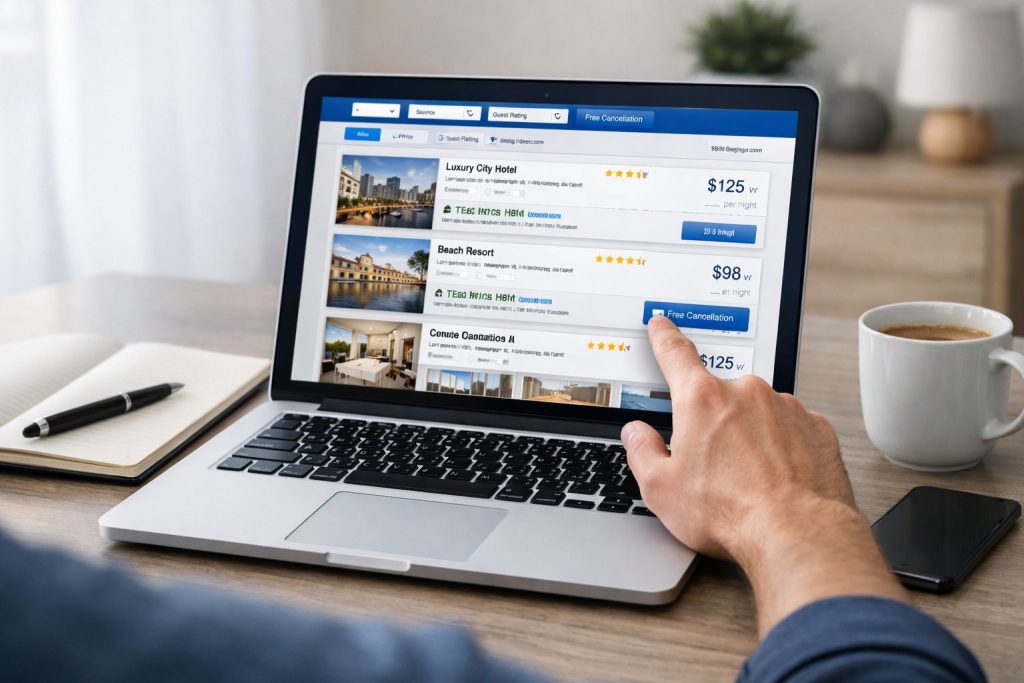
The big selling point is comparison shopping. You can filter by price, location, amenities, cancellation policies, and guest reviews.
Everything shows up in one place, so you’re not opening 47 browser tabs trying to remember which hotel had the free breakfast.
For property owners, there’s a backend dashboard (they call it the Extranet) where you manage your listing, respond to guests, adjust pricing, and track bookings. The platform handles transactions and deposits money into the property owners account according to the payment schedule you choose.
Looking to book your next trip? Check current deals on Booking.com here and see what’s available in your destination.
The Features That Actually Matter
Massive reach. Booking.com processes about 1.5 million room nights every single day. For travelers, this means tons of options and verified reviews.
For property owners, it means serious exposure… the platform operates in 43 languages and partners with major search engines plus over 17,500 affiliates.
That’s a lot of eyeballs on your listing.
Transparent pricing (mostly). One thing I appreciate when researching this is that Booking.com shows the total price upfront. Service fees are built into what you see, so you won’t get surprise charges at checkout.
Well, that’s how it’s supposed to work anyway. More on that later.
Budget tools. They recently added these budget-setting features, allowing you (or your company, if you’re traveling for work) to set spending limits by city or country. Properties that exceed your budget get flagged, but you can still book them if you want.
It’s handy for keeping track without blocking options completely.
Performance data. Both sides get metrics. Travelers see cancellation policies, response times, and instant booking availability.
Hosts see booking trends, competitor pricing, occupancy rates, and revenue reports.
It’s pretty detailed.
Verified reviews. This is huge. Reviews only come from people who actually booked through the platform.
You can’t just write a random review without having stayed there.
Adds some trust to what you’re reading.

How It Actually Works Day-to-Day
For Travelers
The booking flow is simple enough. Search your dates and location, scroll through results, click a property you like, read reviews, check the cancellation policy, and book.
The whole thing takes maybe 10-15 minutes if you’re being thorough.
One thing that stands out is the cancellation options. Properties have different policies… some offer free cancellation up until 24-48 hours before check-in, others are non-refundable.
It’s clearly marked, though, so you know what you’re agreeing to.
The downside is the messaging system. To ask the host specific questions before booking (like “can I check in at 2am?” or “is there actually parking?”), The platform doesn’t make that easy.
It’s very transaction-focused. You book, you show up, you stay.
Not much relationship-building is happening.
For Property Owners
Setting up a listing is more involved. You need detailed information about your property type, room configurations, amenities, photos from multiple angles, check-in procedures, house rules, and payment preferences. It’s thorough but takes time.
The Extranet dashboard (where hosts manage everything) is functional but kind of clunky. Hosts often struggle to find commonly used features quickly, and the layout can make routine tasks feel tedious. People describe it as ‘hotel-style,’ meaning it prioritizes efficiency over intuitiveness.
You can bulk-edit properties and manage many properties, which is useful if you’re running several units.
If you’re just renting out your spare bedroom, though, it feels like overkill.
One major issue hosts mention is calendar syncing. If you list on Booking.com, Airbnb, and Vrbo, you have to manually update each calendar to avoid double-bookings, which many hosts find stressful and difficult to manage.
Booking.com expects you to honor every reservation, even if your calendar didn’t update properly.
Most hosts end up using a channel manager (a separate piece of software) to prevent disasters.
What Real Users Say (The Good and Bad)
Traveler Experiences
People generally like the interface. It’s clean, filters work well, pricing is upfront (usually), and the verified reviews help with decision-making.
The flexibility with cancellation policies gets mentioned a lot. Being able to book something with free cancellation and change plans later without penalty is huge, especially for travel with uncertain dates.
The complaints center on a few consistent issues:
Inconsistent pricing info. Some travelers report seeing one price in search results and a different price at checkout. Or the confirmation email shows something different than what the booking page displayed. It doesn’t happen every time, but it’s frequent enough to be a pattern.
Customer support problems. When things go wrong (canceled booking by the host, incorrect charges, property not matching the description), getting help is hit-or-miss. The 24/7 support exists, but response quality varies wildly.
Some people get fast resolution, others get stuck in email loops for weeks.
Hidden fees (sometimes). Despite the “transparent pricing” promise, some properties add resort fees or city taxes that aren’t fully disclosed until later. This seems property-specific rather than platform-wide, but it’s frustrating when it happens.
Property Owner Experiences
Hosts appreciate the exposure. That 1.5 million daily bookings thing is real, and the global marketing reach brings guests you wouldn’t get otherwise.
But the money side causes constant frustration.
Commission fees hurt hosts’ bottom line. The average commission is around 15%, but it ranges from 10% to 25% depending on location and property type. That means for a $100/night booking, you’re paying Booking.com $15 out of your income.
That adds up fast, especially if you’re running a small operation with tight margins.
Guest vetting is limited. Unlike some platforms, Booking.com doesn’t require identity verification for guests before booking. For property owners, this creates anxiety about who is staying on their property, and the lack of deposit systems or effective procedures for handling property damage adds extra risk.
If a guest trashes your place, you’re stuck dealing with customer support to try getting compensated. The process is slow and unclear.
Calendar sync issues keep coming up for hosts. Hosts report that double bookings occur even after syncing their calendars across platforms. They feel frustrated because Booking.com still holds them responsible, even if the cause was a failed sync on Booking.com’s end.
Support isn’t great for hosts either. When urgent issues arise—like a guest canceling at the last minute, payments not arriving, or listings being flagged for unclear reasons—getting timely help is tough. The support team is available, but hosts often wait a long time for solutions, leaving them feeling stranded during stressful situations.
If you’re ready to search for accommodations, you can browse options and read verified reviews from guests who actually stayed there.
The Money Talk
For Travelers
Using Booking.com as a guest is free. You’re not paying extra service fees on top of the accommodation cost… It’s all bundled into the displayed price.
The question is whether you’re getting better deals than you would by booking directly with the hotel or with competitors.
According to reports, Booking.com prices are competitive for international travel and last-minute bookings. Booking directly with the property might save you money on longer stays (4-5+ days), but you often lose the flexible cancellation policies.
So it depends on what you value more… saving maybe 10-15% by booking direct, or having the safety net of free cancellation through Booking.com.
For Property Owners
The math gets tighter here.
If you’re paying a 15% commission on every booking, you keep 85% of your nightly rate. Factor in cleaning costs, utilities, property maintenance, time spent managing the listing, and your actual profit shrinks further.
The platform makes sense when you need the marketing reach. If you can’t fill your property on your own, that 15% commission is worth paying to get bookings you wouldn’t otherwise have.
It makes less sense if you already have strong direct booking channels or repeat guests. Paying 15% to Booking.com for a customer you could have booked yourself feels wasteful.
Straight-Up Pros and Cons
What Works Well
The global inventory is massive. 28 million listings means you’ll probably find something that fits your needs, especially for international destinations.
Verified reviews add trust. Knowing the reviews come from actual guests who stayed there (not fake reviews or competitors leaving bad ratings) makes the feedback more reliable.
Flexible cancellation policies help with uncertain plans. Being able to change or cancel without penalties gives you breathing room.
The interface is clean, and comparison shopping is easy. Sorting by price, filtering by amenities, checking cancellation policies… it all works smoothly.
For hosts, the exposure and automated booking system brings guests without you having to do much marketing.
What Doesn’t Work Well
Commission fees cut deep into host profits. 15% on average is expensive, especially for independent property owners.
Guest vetting is basically nonexistent. Hosts take on risk without much protection from problem guests.
Customer support quality is inconsistent for both travelers and hosts. When things go wrong, getting help can be frustrating and slow.
Calendar syncing creates double-booking nightmares if you list on many platforms.
Limited pre-booking communication makes it hard to ask specific questions or build rapport before arrival.
Pricing discrepancies still happen despite promises of transparency.
Who Should Use Booking.com
If You’re Traveling
This platform works well when you want to compare lots of options quickly, especially for international trips. The verified reviews and transparent cancellation policies help build confidence.
It’s less ideal if you prefer getting to know your host before booking, or if you’re looking for unique, off-the-beaten-path places where direct booking helps build better relationships.
If You’re a Property Owner
List on Booking.com when you need marketing reach and can absorb the 15% commission as a cost of doing business. It works best as part of a multi-platform strategy, not your only listing channel.
Skip it (or minimize reliance on it) if you operate a single property with strong direct booking channels, or if the commission structure doesn’t align with your profit margins.
Want to see if Booking.com has good options for your next trip? Browse their current inventory here and filter by what matters to you.
Final Thoughts on This Booking.com Review
Booking.com delivers on its promises at scale. It connects travelers with accommodations, processes transactions, and provides marketplace infrastructure that works.
For travelers, it’s a legit option that makes comparison shopping easier. The verified reviews and clear cancellation policies add confidence when booking unfamiliar places.
For property owners, it’s a necessary evil in many cases. The exposure and booking volume help fill inventory, but the commission fees and weak guest protection make it frustrating.
The platform isn’t broken, and it’s definitely not a scam. It functions exactly as designed. The friction comes from the business model itself… high commissions that favor the platform over property owners, customer support that feels distant when problems arise, and a guest vetting process that creates host risk.
If you’re planning a trip and need accommodation, Booking.com is worth checking alongside direct booking and competitor platforms. Compare prices, read reviews carefully, and pay attention to cancellation policies before committing.
If you’re a property owner, approach it strategically. Understand the fee structure, protect yourself against calendar syncing disasters, and supplement Booking.com with direct booking efforts whenever possible.
The travel booking space is constantly evolving, and platforms like Booking.com continue to adjust their features and policies. As of 2026, it remains one of the biggest players in online travel booking, which means it’s not going anywhere soon.
Whether that’s a good thing or not depends entirely on which side of the transaction you’re on.
Check out current Booking.com options here if you want to browse what’s available and compare their pricing to your specific travel plans.
Property Owners – Here is a comparison tool if you are renting your property out.
Booking.com Profit Calculator
Calculate your actual earnings after Booking.com’s commission and expenses. Compare your net profit between listing on Booking.com versus direct bookings to make informed decisions about your property listing strategy.
Affiliate Disclosure for Smart Miles Traveler
At Smart Miles Traveler (https://smartmilestraveler.com), our goal is to provide helpful, honest, and practical travel tips, product recommendations, and money-saving strategies.
Some of the links on this website are affiliate links. This means that if you click on a link and make a purchase, we may earn a small commission at no extra cost to you.
These commissions help support the operation of this website and allow us to continue creating free, high-quality travel content for our readers.
Questions or Concerns
If you have any questions about our affiliate relationships or how this website operates, please feel free to contact us.
📧 Email: info@smartmilestraveler.com