

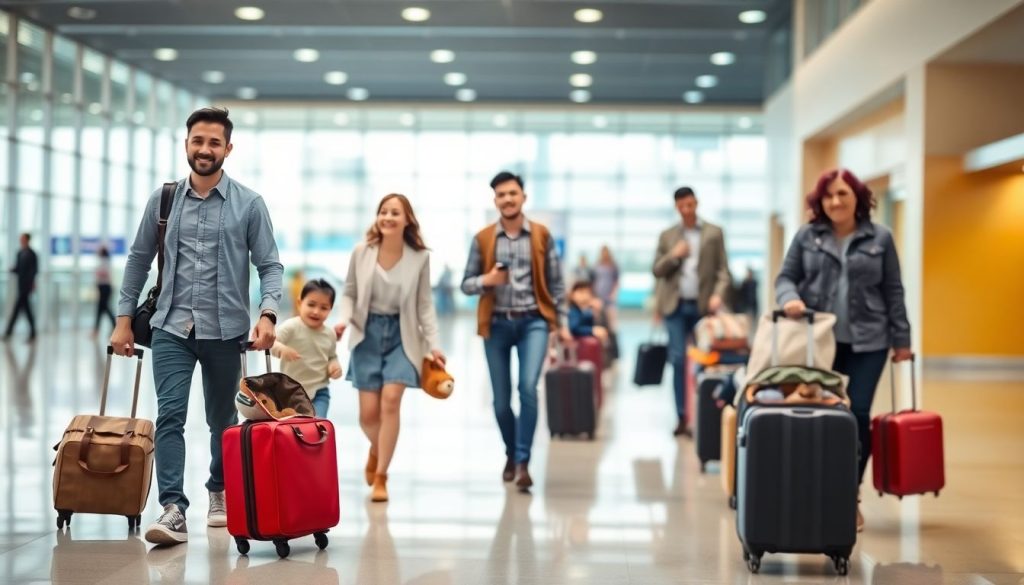
I’ve watched too many families struggle through airports with overflowing suitcases, forgotten essentials, and kids melting down because someone packed the favorite stuffed animal in a checked bag that’s now somewhere over Kansas.
After years of family trips and plenty of my own packing disasters, I’ve learned that the difference between a smooth vacation and a stressful one often comes down to what you pack and how you pack it. This is where Family Travel Hacks can make a significant impact.
In this article, I will share 7 essential Family Travel Hacks to make your packing experience stress-free.
These Family Travel Hacks are designed to make your travel experience easier.
Packing for a family means creating a system that keeps everyone organized, reduces stress at security checkpoints, and ensures you have what you need without lugging around half your house. The techniques I’m sharing have saved my sanity more times than I can count.
Utilizing Family Travel Hacks can significantly enhance your vacation.
The Secret to Stress-Free Packing
✈️ Family Travel Packing List Generator
Create a customized, stress-free packing list based on your trip details. Never forget essentials again!
Your Personalized Packing List
Before we dive into specific techniques, understanding why most families overpack helps tremendously. There’s this fear-based mindset that kicks in when you’re responsible for other humans, especially small ones.
What if someone gets sick?
Integrating these family travel hacks into your routine can be transformative. Implementing these hacks can reduce your stress levels.
What if the weather changes? What if my toddler decides their current favorite shirt is suddenly unbearable and they need seventeen backup options?
This anxiety-driven packing leads to overstuffed bags, excess luggage fees, and the physical exhaustion of hauling too much stuff through terminals and hotels. The real shift happens when you move from “what if” packing to “what’s likely” packing.
Research shows that travelers typically use only about 60% of what they pack, while families tend to overpack by a larger margin. You actually need far less than you think. Kids already wear the same comfortable clothes repeatedly when traveling.
Most destinations have stores where you can buy forgotten items.
And honestly, dealing with one small inconvenience is way easier than managing three oversized suitcases and a cranky family.
The challenge most parents face is letting go of the control that overpacking provides. Overcoming this requires a mindset shift that views packing light as empowering rather than risky.
You’re more mobile, more flexible, and honestly more relaxed when you’re not managing a mountain of luggage.
The Foundation – Choosing the Right Luggage System
Your luggage choice fundamentally shapes everything else about your packing strategy. I’ve seen families bring six separate bags for a week-long trip, and I’ve seen savvy travelers manage with strategically chosen pieces that work together as a system.
For families, the sweet spot usually means one carry-on per person over age five, plus one larger checked bag that everyone shares for bulkier items. This approach gives you flexibility while keeping things manageable.
The carry-ons should have smooth-rolling wheels (four-wheel spinners genuinely work better than two-wheeled rollers for airport navigation), compression features, and exterior pockets for quick-access items.
The shared checked bag holds items such as extra shoes, bulkier clothing, and full-size toiletries. Choose something with internal organizational features, such as zippered dividers.
Hard-shell cases protect breakables better, but soft-sided bags often have more give when you’re trying to maximize capacity.
Applying these Family Travel Hacks will minimize stress.
For younger kids who can’t manage their own rolling bag, a quality travel backpack works beautifully. Look for padded shoulder straps, a chest clip to distribute weight properly, and enough structure that the bag doesn’t collapse when empty.
One often-overlooked consideration is bag color and distinctiveness. When everyone in your family has black rolling bags, you’re setting yourself up for confusion and mix-ups.
I learned this the hard way when my daughter grabbed the wrong bag at baggage claim, and we didn’t realize until we were back at the hotel.
Now we use different colored bags or add distinctive luggage tags or straps that are visible from across a carousel.
Packing Cubes – The Game-Changing Organization System
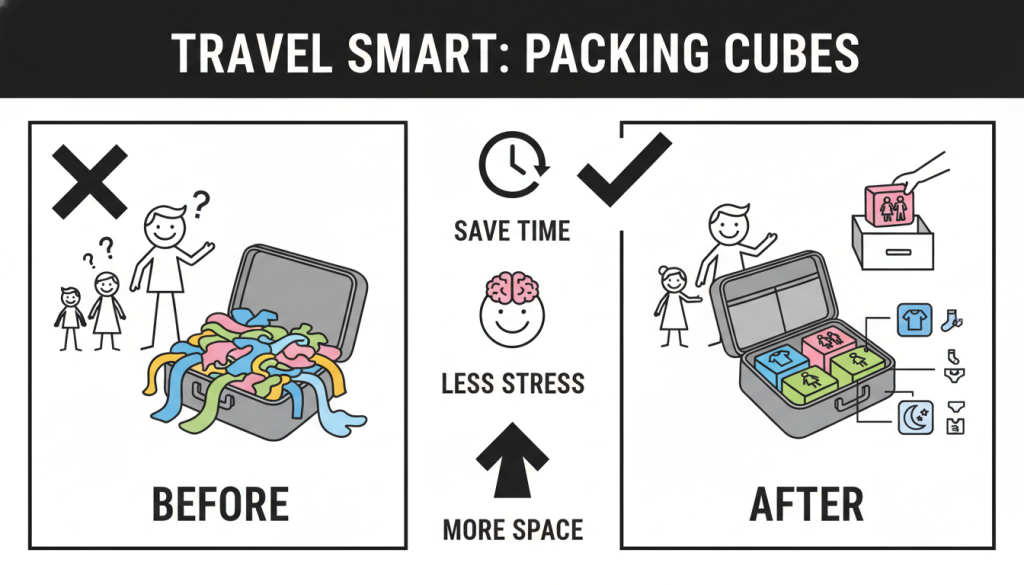
I genuinely can’t imagine traveling without packing cubes anymore. These simple zippered fabric containers transform chaotic suitcases into organized systems where you can actually find things without unpacking everything.
The basic concept is straightforward. You group similar items into cubes that stack neatly in your luggage. But the implementation requires some thought to maximize effectiveness.
I assign each family member a specific cube color. My older daughter gets pink cubes, my middle daughter uses blue cubes, my younger son uses green cubes, and my partner and I use gray cubes.
This color-coding lets us identify whose clothes are whose at a glance, which is incredibly helpful when you’re living out of suitcases in a hotel room.
Within each person’s color, I use differently sized cubes for different categories. The largest cube holds shirts and pants.
A medium cube contains underwear and socks.
Using these family travel hacks ensures a smoother travel experience.
A smaller cube has pajamas or workout clothes. This specificity means you’re not digging through everything to find one pair of socks.
The compression aspect of packing cubes is where the real magic happens. Quality cubes have compression zippers that squeeze out excess air, reducing the volume of soft items by 30-40%.
These hacks revolve around effective packing solutions.
I normally pack items into the cube, then use the compression zipper to flatten everything.
This creates remarkably more space in your suitcase than you’d think possible.
One technique that surprised me with its effectiveness is the rolling-then-cubing method. Instead of folding clothes into packing cubes, I roll each item tightly, then stack the rolls vertically in the cube like files in a filing cabinet.
This minimizes wrinkles better than folding, and you can see every item when you open the cube, rather than having to lift layers to see what’s underneath.
The practical application extends beyond just the packing process. When you arrive at your destination, you can lift entire cubes from your suitcase and place them in drawers.
No unpacking required. When the time comes to leave, everything is already organized and ready to go back in the suitcase.
Choosing the right clothing is one of the family travel hacks you should consider.
This saves significant time and mental energy, especially when you’re managing multiple kids’ belongings.
Strategic Clothing Selection and the Capsule Wardrobe Approach
The clothing you choose to pack matters just as much as how you pack it. I’ve evolved toward a capsule wardrobe approach for family travel, which has dramatically reduced our luggage volume while increasing outfit flexibility.
The core principle is selecting pieces that coordinate with each other in multiple combinations. For a week-long trip, I pack each person with about 5 tops, 3 bottoms, and 1 jacket or sweater.
The key is choosing items in complementary colors so any top works with any bottom.
For kids, this typically means selecting a color scheme like navy, gray, and one accent color. Every piece should mix and match efficiently.
Fabric choice deserves serious consideration. Synthetic blends and merino wool resist wrinkles, dry quickly if you need to do sink laundry, and often look fresh even after multiple wears.
I avoid cotton-heavy items that wrinkle easily and take forever to dry.
Performance fabrics designed for travel genuinely make a difference in how presentable your family looks after hours in transit.
The layering strategy is particularly important for families because kids are terrible at regulating their temperature comfort. Instead of packing heavy jackets and bulky sweaters, I pack multiple thinner layers.
A base layer, a mid-layer fleece, and a water-resistant outer shell can be combined for warmth or worn separately in milder weather.
This versatility means you’re prepared for temperature fluctuations without overpacking.
Consider these to make packing less overwhelming.
Choosing shoes wisely is one of the most important family travel hacks.
Shoes are the bulkiest items in any suitcase, so limiting them requires real discipline. Each person gets the shoes they’re wearing on travel day, plus at most one extra pair.
Travel-day shoes should be comfortable walking shoes that work for most activities.
The second pair fills a specific need. Dressier shoes for nice dinners, sport sandals for beach destinations, or boots for cold-weather trips.
One practical challenge families face is kids’ growth spurts. You don’t want to pack clothes that barely fit at the start of the trip.
I’ve learned to pack items with a bit of growing room, and I accept that kids might look slightly less put-together in clothes that aren’t perfectly fitted. The alternative is packing multiple sizes “just in case,” which defeats the whole point of an effective packing strategy.
Toiletries and Liquids Management
Follow the 3-1-1 rule as part of the family travel hacks to manage liquids.
The 3-1-1 rule for carry-on liquids (3.4 ounces or less per container, all containers fitting in one quart-sized bag, one bag per passenger) creates real constraints for families. But with some strategic planning, you can absolutely manage without checking bags just for toiletries.
First, I buy travel-sized versions of essential products rather than transferring from full-size bottles. Yes, the per-ounce cost is higher, but the convenience and reliability outweigh the few extra dollars.
Leaking bottles have ruined enough of my packing that I now prioritize quality travel containers.
For families, the multiplication challenge is real. Four people means four times the toiletries. Sharing becomes strategic here.
One family-size tube of toothpaste works for everyone.
One bottle of sunscreen serves the whole group. One container of shampoo can be shared by multiple people, and most hotels provide these at no extra cost. Just come prepared.
This consolidation significantly reduces the number of individual bottles you need to manage.
Solid choices are genuinely underrated for travel. Shampoo bars, solid deodorants, and bar soap don’t count toward liquid limits and can’t leak.
I was initially skeptical, but quality solid products work just as well as liquid versions and eliminate the hassle entirely.
A single shampoo bar lasts for weeks of travel and takes up about the same amount of space as a hotel soap.
The practical application for families with young kids is to bring just enough diapers, wipes, and formula for the travel day plus one extra day, then purchase more at your destination. Diapers and wipes are available virtually everywhere, and they take up a ridiculous amount of luggage space.
Yes, your preferred brand might not be available, but kids adapt fine to different diaper brands for a week.
Medications and first-aid supplies require a different approach because you can’t easily replace prescription items. I keep a small dedicated pouch with basic medications. Children’s pain reliever, an antihistamine, motion sickness medication, bandages, and any prescription items.
This pouch stays in my carry-on because it’s always accessible during travel, and it’s saved us multiple times when someone suddenly felt unwell on a flight.
Electronics and Entertainment Organization
Modern family travel means managing multiple devices, chargers, headphones, and entertainment options. Without organization, you end up with a tangled mess of cords and constant searches for the right charger.
I use a dedicated electronics organizer, essentially a small zippered pouch with elastic loops and pockets. Each cord gets wrapped and secured in its spot.
Chargers, portable battery packs, and adapters each have designated spaces.
This system lets me locate any electronic item in seconds, rather than dumping out an entire bag to search for a specific cord.
The practical challenge is that different family members have different devices with different charging requirements. I’ve standardized our family on USB-C wherever possible, but we still have older devices requiring different cables.
My solution is labeling each cord with a small piece of tape indicating what it charges.
Never underestimate the value of these Family Travel Hacks.
This simple step prevents the frustration of trying five different cords before finding the right one.
For airplane entertainment, I’ve learned that downloading content helps avoid relying on spotty airplane Wi-Fi. Before any trip, I download movies, shows, and books to tablets and phones.
I create a separate folder of new content the kids haven’t seen before, which makes it more engaging than rewatching familiar favorites.
PRO TIP: Keep kids engaged with an entertainment bag.
One technique that’s worked well for our family is the “entertainment bag” that stays sealed until we’re actually in transit. I pack small toys, activity books, stickers, and snacks that the kids only get during travel time.
The novelty makes these items more engaging, and it creates positive associations with travel time rather than viewing it as boring or unpleasant.
The key insight here is that you don’t need to bring every toy and entertainment option. Kids are actually pretty adaptable to having fewer choices when traveling.
Family travel hacks can simplify your trip planning and execution.
I bring one small stuffed animal or comfort item per child, plus the dedicated entertainment bag for transit.
Less to keep track of, less to lose, and honestly, the kids play with hotel amenities and explore their destination more when they’re not buried in familiar toys.
Documentation and Important Items Organization
Keep a dedicated document holder, photograph documents, and separate credit cards as a family travel hack.
Losing passports, boarding passes, or important travel documents can derail an entire trip. I’ve developed a system that keeps everything organized and immediately accessible.
A dedicated travel document holder keeps passports, boarding passes, hotel confirmations, rental car reservations, and travel insurance information in one place.
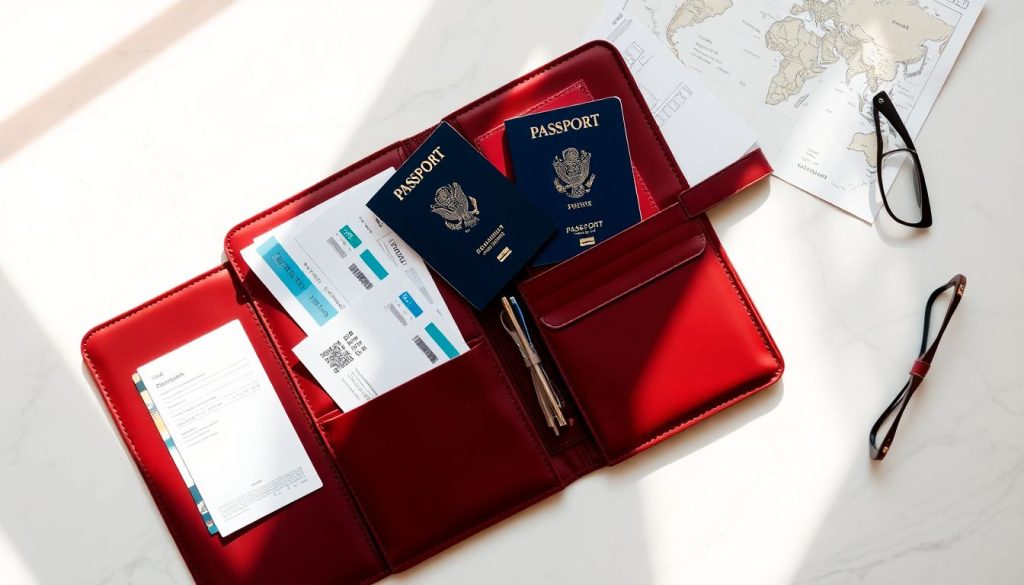
I use a zippered pouch with multiple compartments. Passports in one section, printed confirmations in another, and a clear plastic sleeve for boarding passes that need frequent access.
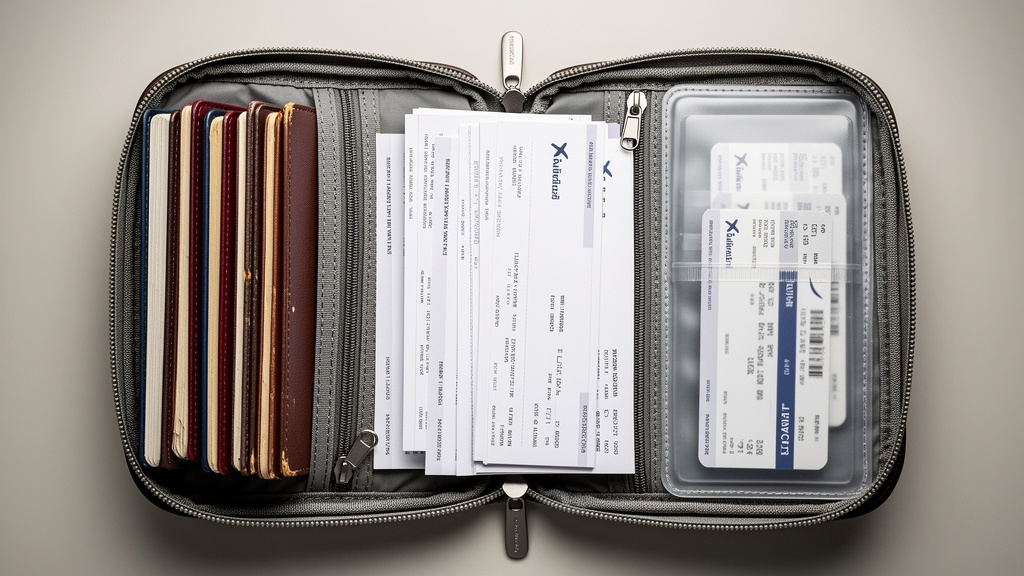
The key insight is redundancy for critical items. I keep photocopies of passports and credit cards separate from the originals.
I also photograph important documents and email them to myself so I can access them from any internet-connected device.
This redundancy has saved us when my son accidentally left his student ID in a hotel room several states away.
For families traveling internationally, keeping all passports together makes sense during most of the trip, but I separate them during the actual travel day. I carry the kids’ passports, while my partner carries ours.
This way, if one bag gets lost or stolen, we don’t lose all the family’s passports at once.
Credit cards and cash need similar strategic distribution. I never keep all our money in one location.
Some goes in my wallet, some in my partner’s wallet, and emergency cash is hidden in a separate bag.
Don’t forget to use these family travel hacks on your next adventure.
This seems overly cautious until you experience having your wallet stolen and are grateful you have backup funds.
Implement these family travel hacks to improve your packing efficiency.
Packing Day Execution – The Step-by-Step Process
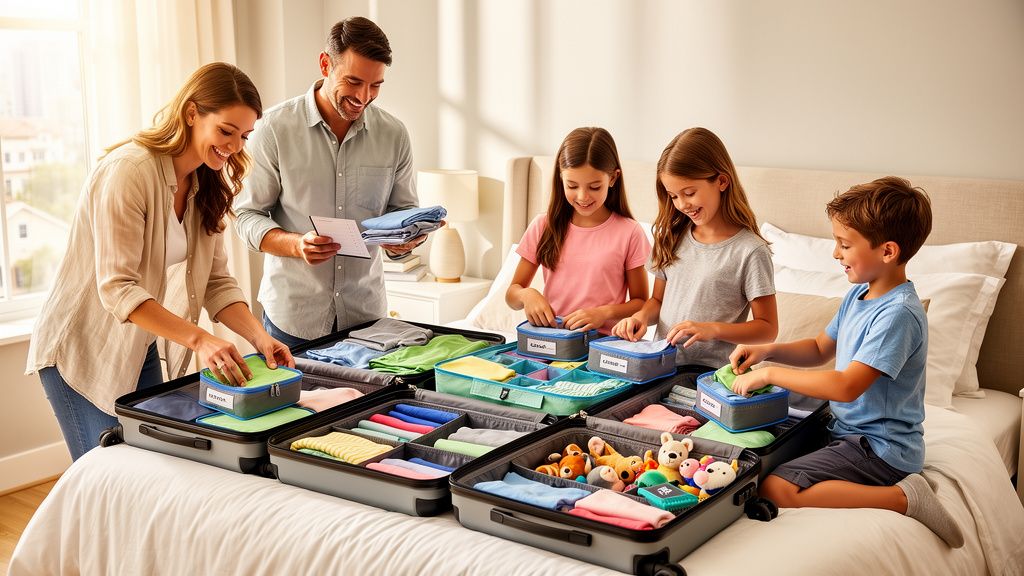
With all the preparation finished, the actual packing process follows a specific sequence that maximizes efficiency and ensures nothing gets forgotten.
I start by laying out everything I plan to pack on the bed. This visual inventory lets me see if I’m overpacking before items go into bags. I look for redundancy. Do I really need three similar shirts?
Could I eliminate one pair of shoes? Use a dedicated bag for electronics as part of the family travel hacks.
This editing process typically reduces my initial pile by 20-30%.
Next, I pack heavy items first at the bottom of the suitcase (the part closest to the wheels when rolling). Shoes, toiletry bags, and heavier clothing create a stable base.
This weight distribution prevents your suitcase from tipping over and makes it roll more smoothly.
I fill shoes with small items like socks or charger plugs to maximize space utilization. Rolling belts around the inside perimeter of the suitcase uses otherwise wasted space.
Finding the right bag for your family vacation can be overwhelming. Learn more about our recommended travel bag here.
These little space-saving techniques add up significantly across an entire suitcase.
Packing cubes go in next, fitting together like a puzzle. I typically place the largest cubes in the main compartment, then fill gaps with smaller cubes and soft items like jackets or sweaters.
The compression capability of quality packing cubes makes a noticeable difference here. I compress each cube before placing it in the suitcase for maximum space efficiency.
The top layer contains items I’ll need first at the destination or might need during travel. A change of clothes for each person goes here in case checked bags get delayed. A light jacket or sweater for cold airplanes is easy to keep on hand.
My carry-on packing follows similar principles but prioritizes accessibility. Items needed during travel go in external pockets or near the top.
Electronics organizer, snacks, entertainment items, and one change of clothes for each person fill the main compartment.
Important documents stay in a designated pocket that I can access quickly during security and boarding.
The final step is weighing everything. Most airlines allow 50 pounds per checked bag, and it’s far better to rebalance your weight before you get to the airport.
I use a handheld luggage scale at home to verify we’re under limits.
If something’s over, I redistribute items between bags or make hard choices about what really needs to come along.
Frequently Asked Questions
How do I keep my kids’ clothes organized in shared luggage?
Color-coded packing cubes work incredibly well for this. Assign each child a specific color, and all their clothes go into cubes of that color.
When you open the suitcase, you can immediately see whose clothes are whose without sorting through everything.
This system also makes it easier for kids to put away their own belongings at their destination.
What’s the best way to pack clothes without wrinkles?
Rolling clothes tightly and placing them vertically in packing cubes minimizes wrinkles better than folding. Choose wrinkle-resistant fabrics, such as synthetic blends or merino wool, when possible.
For items that absolutely can’t wrinkle, pack them flat on top of everything else in your suitcase, or wear them during travel.
How many days of clothes should I pack for my kids?
For trips longer than 4 days, pack about 5 days’ worth of clothes, regardless of trip length. Plan to do laundry once during your trip, which roughly halves your packing needs.
For shorter trips, pack one outfit per day plus one extra for emergencies.
Can I bring snacks through airport security?
Yes, solid foods are allowed through TSA security checkpoints. Pack non-perishable snacks like crackers, granola bars, dried fruit, and nuts in individual portions.
Baby food pouches are also permitted in reasonable quantities for young children.
Liquids like yogurt or applesauce must follow the 3-1-1 rule unless they’re for infants.
Should I pack a separate bag for each family member?
For air travel, one carry-on per person over age five plus one shared checked bag typically works best. This gives everyone personal space for essentials while consolidating bulkier items.
Younger children can use backpacks instead of rolling bags.
Color-code or mark bags so everyone can quickly identify their own luggage.
How do I pack electronics without tangled cords?
Use a dedicated electronics organizer pouch with elastic loops and compartments. Wrap each cord separately and secure it in its designated spot.
Label cords with small pieces of tape indicating what device they charge.
Keep all electronics and chargers in this one pouch, so you always know where to find them.
What toiletries can I share among family members?
Toothpaste, sunscreen, shampoo, and body wash can easily be shared by the whole family. This consolidation significantly reduces the number of bottles you need to pack.
Buy travel-sized versions or use solid choices like shampoo bars that don’t count toward liquid limits and can’t leak in your luggage.
How much space should I leave for souvenirs?
Pack your checked bag at about 70-80% capacity when departing. This provides space for items you acquire during your trip without exceeding the weight limit on the return flight.
If you’re traveling carry-on only, be more selective about souvenirs or plan to ship larger items home separately.
Key Takeaways
Efficient family packing starts with the right luggage system. One carry-on per person over age five plus one shared checked bag creates the optimal balance of capacity and manageability.
Packing cubes with color-coding transforms chaotic suitcases into organized systems where every family member’s belongings stay separated and easily identifiable throughout the trip.
The capsule wardrobe approach, with mix-and-match pieces in coordinating colors, provides maximum outfit flexibility while minimizing luggage volume, and strategic fabric choices ensure clothes look fresh despite travel wear.
Solid toiletries and shared family-size products significantly reduce the number of liquid bottles while maintaining hygiene and grooming standards throughout your trip.
Dedicated organizational pouches for electronics and documents prevent the tangled mess of cords and the loss of important papers that plague disorganized travelers.
Strategic snack packing in portioned containers satisfies hunger without expensive airport purchases while maintaining easy accessibility during travel.
The actual packing sequence matters. Heavy items first, packing cubes fitted like puzzle pieces, and often needed items packed for easy access create functional suitcase organization.
Leaving 20-30% of checked luggage empty provides space for souvenirs and items acquired during travel, preventing desperate repacking before return flights.
Post-trip reflection and master list updating create a continuous improvement loop that makes each subsequent packing experience easier and more refined than the last.
Affiliate Disclosure for Smart Miles Traveler
At Smart Miles Traveler (https://smartmilestraveler.com), our goal is to provide helpful, honest, and practical travel tips, product recommendations, and money-saving strategies.
Some of the links on this website are affiliate links. This means that if you click on a link and make a purchase, we may earn a small commission at no extra cost to you.
These commissions help support the operation of this website and allow us to continue creating free, high-quality travel content for our readers.
Questions or Concerns
If you have any questions about our affiliate relationships or how this website operates, please feel free to contact us.
📧 Email: info@smartmilestraveler.com